


October 14, 2026, 2:27 pm | Read time: 3 minutes
Some plants are sensitive to lime-rich water, while others are not bothered by it. myHOMEBOOK explains which plants should be watered with rainwater, when tap water is fine, and what softened water offers.
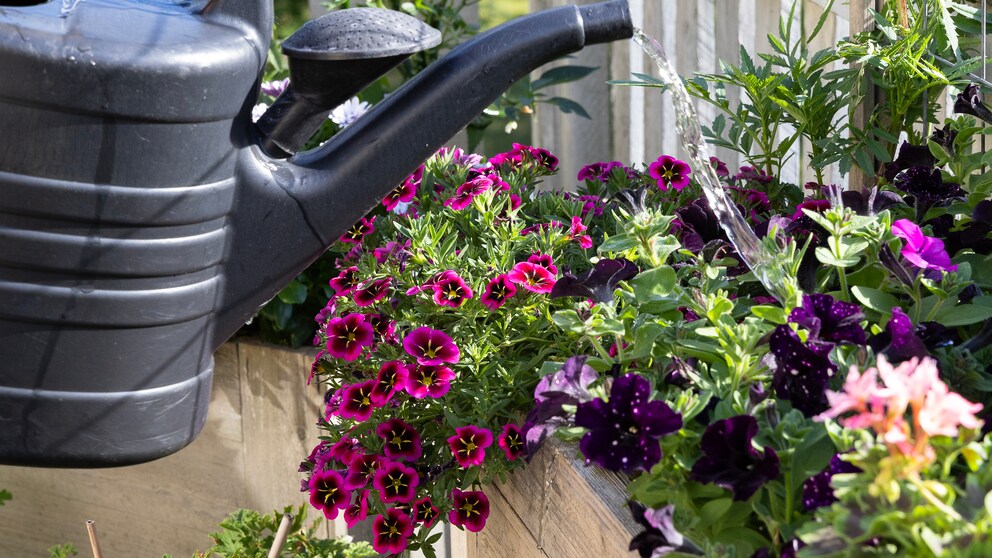
The watering can doesn’t care whether it’s filled with rainwater, regular tap water, or softened water. Plants, however, are more selective about their water, considering them three different drinks. Watering plants with rainwater is generally a safe choice for most species.
Follow myHOMEBOOK on WhatsApp now
Why rainwater is ideal for watering plants
Rainwater is soft and contains few dissolved minerals, making it the most compatible choice for most plants. Plants that are sensitive to lime, such as rhododendrons, azaleas, blueberries, and camellias, benefit the most. Many houseplants, like orchids and ferns, also prefer rainwater.
In contrast, tap water can be hard, containing varying amounts of calcium and magnesium depending on the region. These minerals determine the water hardness.
Water hardness explained: Hardness is measured in degrees of German hardness (°dH). Water with less than 8.4 °dH is considered soft, between 8.4 and 14 °dH is medium, and above that is hard.
For lime-sensitive plants, hard water can become problematic over time: Lime accumulates in the soil and raises the pH level, hindering nutrient absorption. For blueberries, this affects iron uptake. Without it, the shrubs produce less chlorophyll: Young leaves turn yellow while the veins remain green. Photosynthesis suffers, and in the worst case, the plants die. For blue hydrangeas, a rising pH level affects flower color: They can no longer absorb aluminum, and the flowers turn pink.
There’s also an ecological aspect. Using rainwater for irrigation conserves groundwater reserves and saves energy needed for the complex extraction and treatment of drinking water.
Also interesting: 4 methods to collect rainwater in the garden
Why Does a Kettle Keep Accumulating New Limescale?
Why Tap Water Tastes Different Everywhere
When tap water is sufficient
If there’s no significant rain for weeks, the water in the rain barrel will eventually run low. Then tap water is a good option, as a thirsty plant gains little from perfect rainwater if it’s waiting in vain.
Many garden plants tolerate tap water without issue. It mainly depends on how hard the local water is and whether the specific plant is sensitive to lime. Even lime-sensitive plants can handle an occasional can of tap water; it’s the regular use that becomes problematic. Oleander, for instance, likes lime and should ideally be watered with lime-rich tap water.
Why softened water is problematic
A water softener might seem like the perfect solution for hard water, as it removes lime. However, softened water can still be unsuitable for plants.
Traditional water softeners exchange calcium and magnesium for sodium. While the water becomes low in lime, it contains more sodium. Plants can do much less with sodium than with some calcium: No plant needs sodium, and in higher amounts, it can hinder water absorption in sensitive plants. Therefore, softened water is not a substitute for rainwater.
If you have such a system, check if the outdoor faucet is connected to it, as you might be unintentionally watering with softened water.