


November 6, 2025, 5:22 am | Read time: 3 minutes
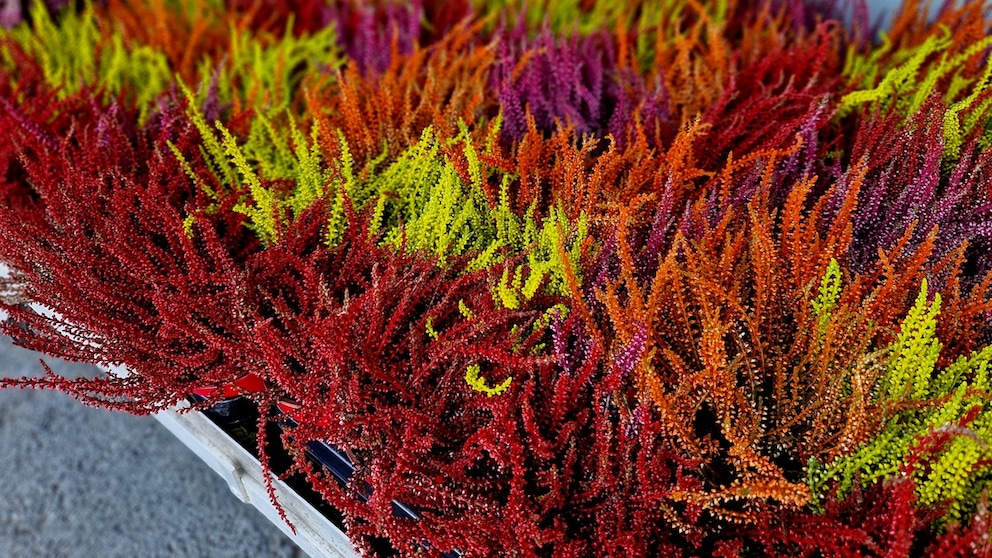
Heather is especially popular in winter. It’s easy to care for, long-lasting, and adds a splash of color during the gray season. The plant already blooms in white, pink, and magenta. But that doesn’t seem to be enough: Winter heather is increasingly being dyed in orange, blue, and yellow. myHOMEBOOK gardening expert Franka Kruse-Gering explains why heather is artificially colored.
Why Heather Is Artificially Colored
Heather is often offered in bright colors today, from vibrant pink to deep blue. The reason for coloring the plants isn’t immediately obvious. However, it’s clear: This practice has its reasons and offers both visual and practical benefits.
Natural Colors Aren’t Enough
An important reason for coloring heather is the greater variety of colors. In its natural form, heather usually blooms in soft pinks, purples, violets, or white. While these colors are harmonious, they offer only a limited selection for decorative purposes.
In contrast, artificial coloring creates intense, unusual shades like vibrant blue, pink, red, yellow, or even green. Such colors don’t occur naturally in heather and give the plant a more striking, modern appearance. Especially in fall and winter, when other plants have faded, the colored heather provides lively splashes of color on balconies, terraces, and in planters. This makes it particularly attractive for sale, as it offers customers a wider selection and more design options.
4 Reasons Why Heather Is So Popular in Winter
5 Evergreen Shrubs for Gardens and Balconies
Colors Boost Business
The coloring of heather is primarily for sales-boosting reasons. With its intense, unnatural colors, the plant stands out more in stores and distinguishes itself from other autumnal plants. Especially in garden centers and supermarkets, where many similar plants are offered, the bright color palette attracts more attention and encourages impulse purchases.
Additionally, the artificial colors appeal to customers looking for something modern or unusual for their balcony, terrace, or to place on graves. This significantly increases the sales potential of the color-enhanced heather, especially in the otherwise colorless fall and winter seasons.
Coloring Lasts Longer
Another reason for coloring heather is the longer-lasting color. Especially in fall and winter, when many plants quickly fade or lose their leaves, colored heathers retain their vibrant appearance for a long time. Often, the so-called “Evergreen” heather is used, whose flowers don’t wilt but remain dry.
Info: Evergreen heather is not a botanical term but a marketing name for heathers that don’t wilt but dry out.
The applied color bonds with these dry flowers, ensuring they shine brightly for weeks or even months—even when the plant is no longer actively growing. This keeps the heather attractive and low-maintenance as a decoration well into winter. For many buyers, this is a significant advantage because they don’t have to care much for the plants while still maintaining colorful accents in the garden or on the balcony.