


July 10, 2026, 1:24 pm | Read time: 4 minutes
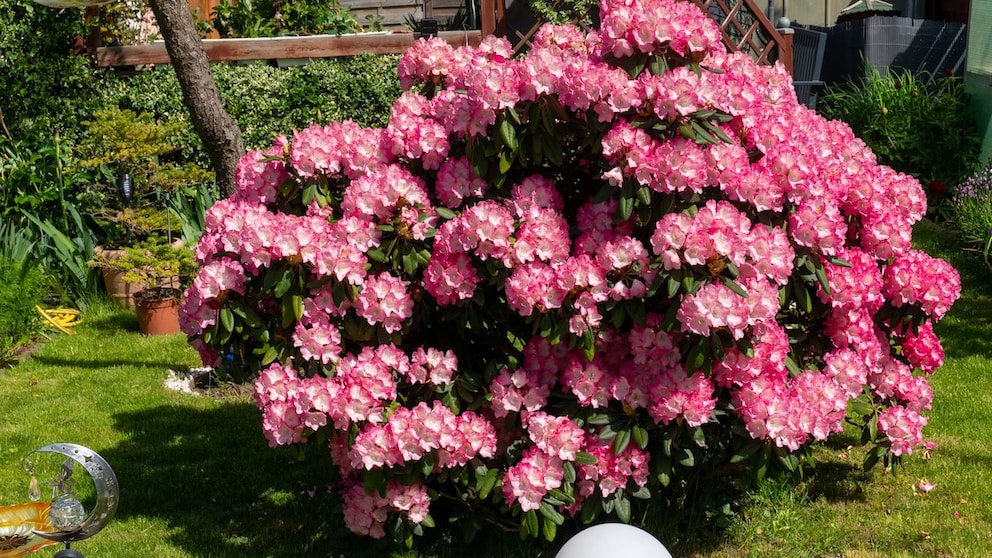
For decades, the rhododendron has been one of the most popular ornamental shrubs in German gardens. With its impressive blooms and evergreen foliage, it is considered a classic in many flower beds. However, due to increasingly warm and dry summers and the desire for more sustainable gardens, the plant is facing growing criticism. Those planting today should take a closer look to see if the location truly meets the needs of a rhododendron or if more climate-resistant alternatives might be a better choice. Even myHOMEBOOK gardening expert Franka Kruse-Gering would no longer plant a rhododendron today.
I, too, have long recommended rhododendrons. Their blooms are impressive, and they lend a special atmosphere to any garden. I particularly appreciate orange blooms. But in recent years, my assessment has changed. I increasingly observe how the shrubs suffer from heat, drought, and changing climate conditions, and the effort they require. Therefore, I would no longer plant a new rhododendron today.
1. Many Gardens No Longer Offer Ideal Conditions
Rhododendrons prefer evenly moist, humus-rich, and acidic soils, as well as a sheltered location in light shade. However, these conditions are becoming increasingly rare in many gardens. Where the soil dries out significantly in summer or the plants are exposed to direct sunlight for hours, many rhododendrons quickly become stressed.
In practice, this often shows through curled leaves, brown leaf edges, or weaker blooms. Regular watering can help, but it does not replace suitable site conditions in the long run. Especially in regions with longer dry spells or on light, sandy soils, cultivation often becomes significantly more labor-intensive.
However, this does not mean that rhododendrons have no future. There are now cultivars that are considered more heat- or sun-tolerant than many of the classic varieties. Even in a suitable location with acidic, sufficiently moist soil, rhododendrons can continue to grow healthily for many years. For me personally, the advantages of more robust shrubs outweigh those of a new rhododendron plant today.
2. The Maintenance Effort Is Simply Too High for Me Today
Another reason for my decision is that rhododendrons often require more attention at unsuitable locations than many other shrubs. They have relatively high demands on their location. On calcareous soils, they often develop poorly, and the soil often needs to be improved or mulched with suitable materials. In dry summers, regular watering is also necessary.
This is by no means a disadvantage if the garden already meets these conditions or if one is willing to invest the effort. However, I personally now prefer shrubs that can better withstand longer dry spells and require less attention overall.

The Three Biggest Beginner Mistakes I Made in the Garden
Understanding Frost Drought in Plants
My Existing Rhododendrons Can Stay
I would not remove my existing rhododendrons. Digging up healthy plants just because I would make a different decision today would neither be sustainable nor sensible in my view. As long as they thrive in their location and grow vigorously, they are welcome to stay.
There Are Good Alternatives–but No True Replacement
There is no true replacement for a rhododendron. Few other shrubs combine such lush blooms with evergreen foliage. Which alternative is suitable depends mainly on the role the shrub is to play in the garden—whether as a floral decoration, privacy screen, standalone feature, or insect-friendly shrub. Those who decide against a new planting will find many shrubs that offer other advantages.
Depending on the location, options include serviceberry, cornelian cherry, wild roses, or smoke bush. They may look quite different from a rhododendron, but they often cope better with heat and occasional drought and are often less demanding.
Ultimately, the right choice always depends on the location. Those with a shady garden with acidic, humus-rich, and consistently fresh soil can still enjoy a rhododendron today. Where these conditions are lacking, I often consider more robust shrubs to be the more sustainable choice in the long term. Therefore, I would personally opt for such species in a new planting today.