

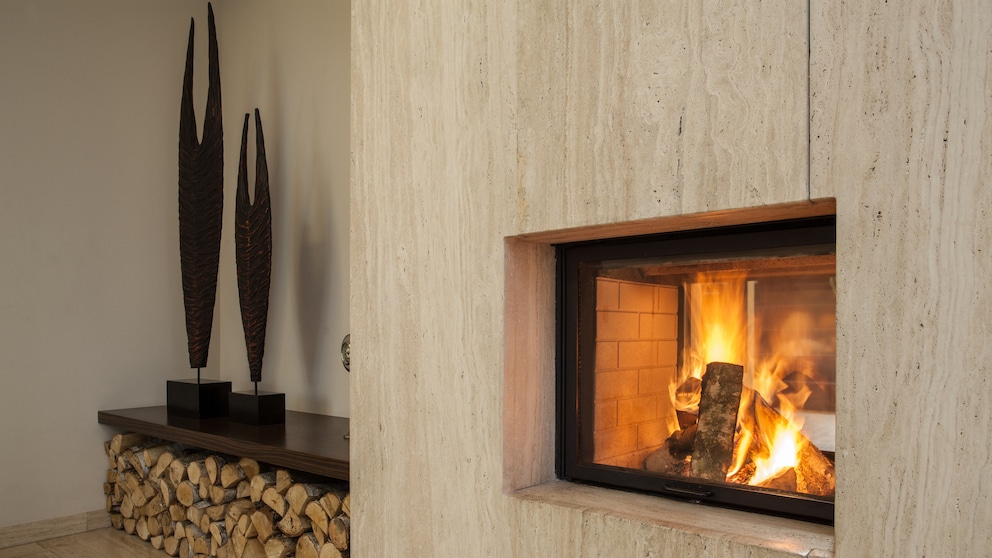

October 26, 2022, 3:12 pm | Read time: 6 minutes
Granite, sandstone, or marble–these types of stone are well-known in interior design and architecture. But now, another natural stone is gaining popularity: travertine. This stone has a history spanning thousands of years and has shaped architecture ever since.
If you want to bring a Mediterranean flair into your home, you should definitely not overlook travertine. The natural stone is widespread in the Mediterranean region and is thus the epitome of the Mediterranean style. Its light color, unique texture, and characteristic pattern make this porous limestone so special. Travertine is particularly valued in architecture and has been used for thousands of years. Where the natural stone comes from, what makes it so special, and how it can be used.
Overview
What is Travertine?
Travertine is a porous type of limestone lined with small cavities. The color spectrum of this natural product ranges from sand, beige, and cream to yellow tones. Travertine consists almost entirely of calcium carbonate and is therefore also referred to as limestone due to its natural occurrence in hot freshwater springs.
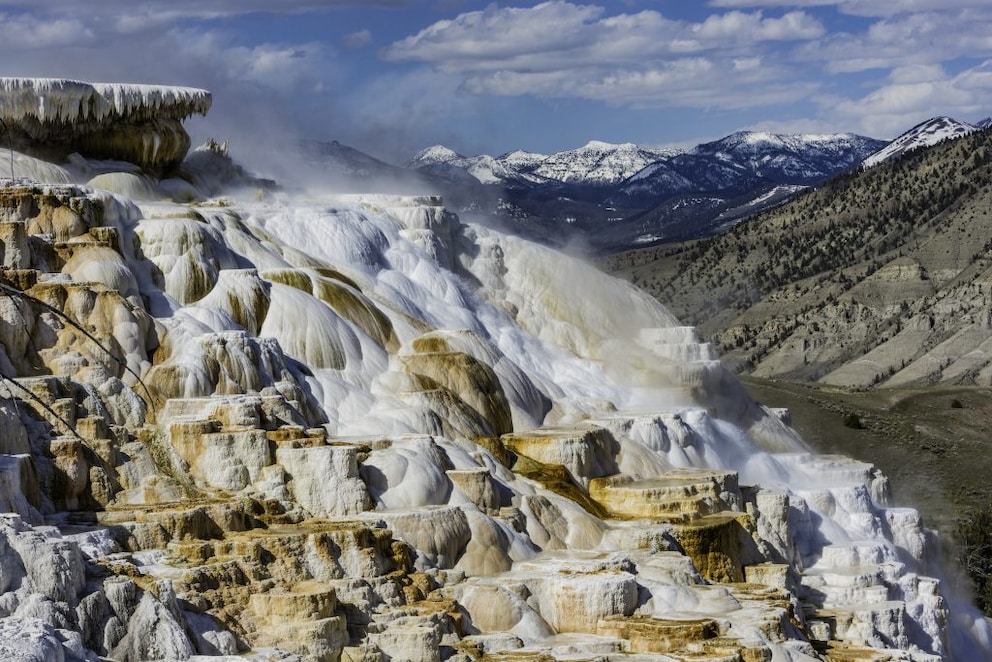
Originally, the stone was called “Travertin Lapis Tiburtinus”–translated, it means “Stone of Tibur.” Tibur is the former name of the city of Tivoli in the Italian province of Lazio–the area where travertine naturally occurs and is mined. The hot freshwater springs there provide the ideal breeding ground for this type of stone.
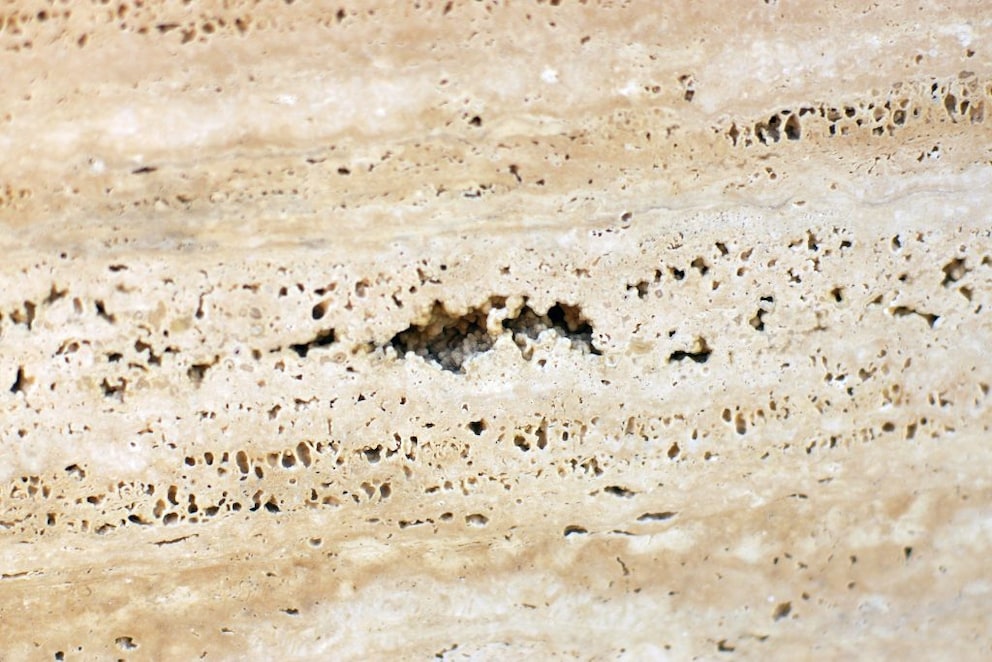
Despite the cavities and porosity, travertine is considered resistant and frost-proof–and is therefore also popular for use as patio stones. The open pores and good evaporation surface also make it ideal for thermal facilities. As with any natural stone, there may be visual changes over the years when used outdoors.
Although travertine is named after a city in Italy, the stone is found worldwide. Known deposits are in Thuringia and Baden-Württemberg, France, Croatia, Bulgaria, the Czech Republic, and Turkey. The stone is also found in the U.S.–for example, in Yellowstone National Park.
The History of Travertine
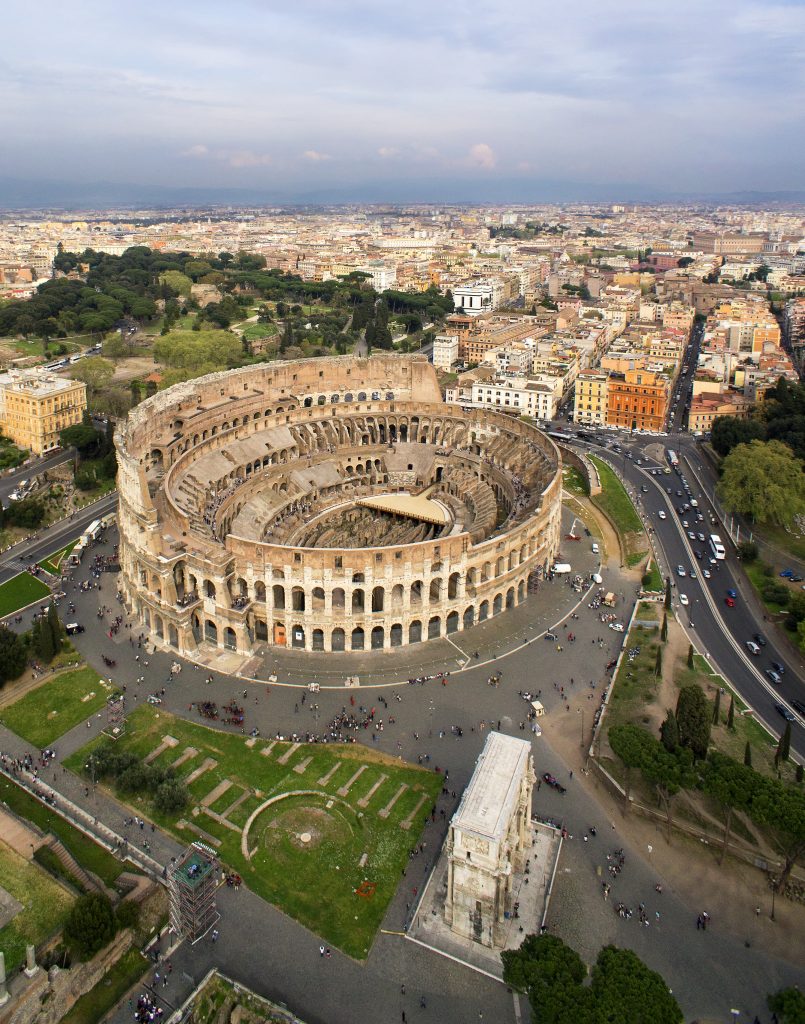
Travertine has been used as a building material for thousands of years. The Romans used the limestone for temples, amphitheaters, and bathhouses, including the monumental Colosseum in Rome. It was built between 72 and 80 A.D. and consists mostly of travertine blocks quarried near Tivoli. About 100,000 cubic meters of travertine were used in the Colosseum. The eight columns at the entrance of St. Peter’s Basilica and the Trevi Fountain in Rome are also made of limestone.
In the 1920s and 1930s, travertine experienced a resurgence in popularity. Architects like Mies van der Rohe ventured into using the natural stone, such as in the Barcelona Pavilion he designed for the 1929 World’s Fair.
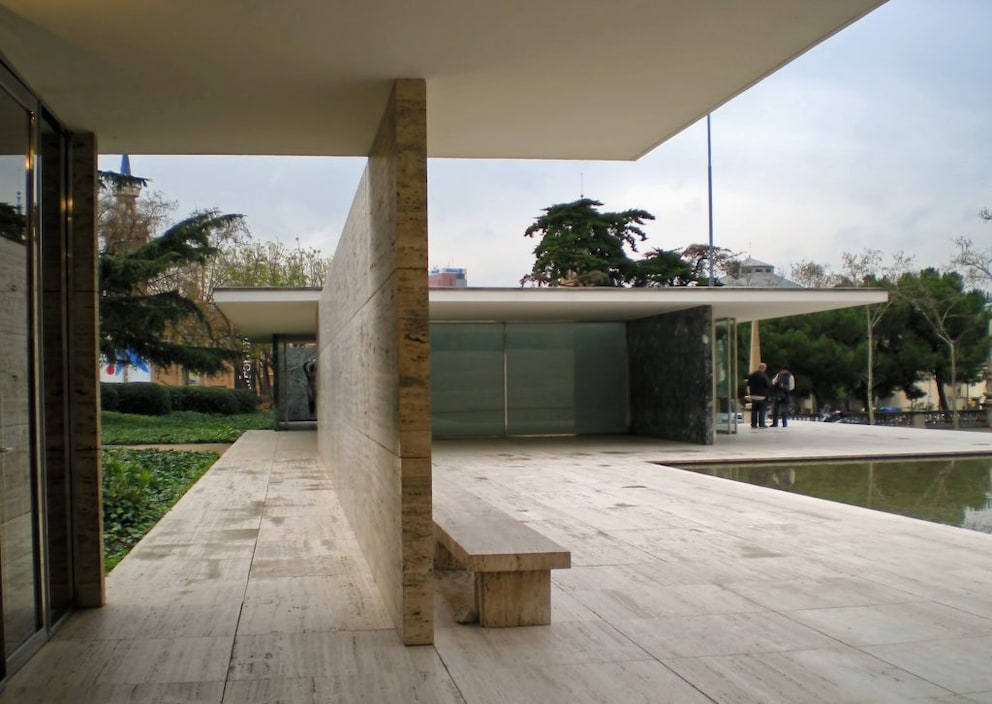
In Germany, the Saxon State Library is made of travertine, as is the St. Bonifacius Market Church in Bad Langensalza, Thuringia, and the facade of the Foreign Office in Berlin.
Travertine Today
Today, travertine is once again in vogue. It is used in modern bathrooms, kitchens, as patio flooring, or wall paneling. Indoors, the natural stone is also used as flooring.
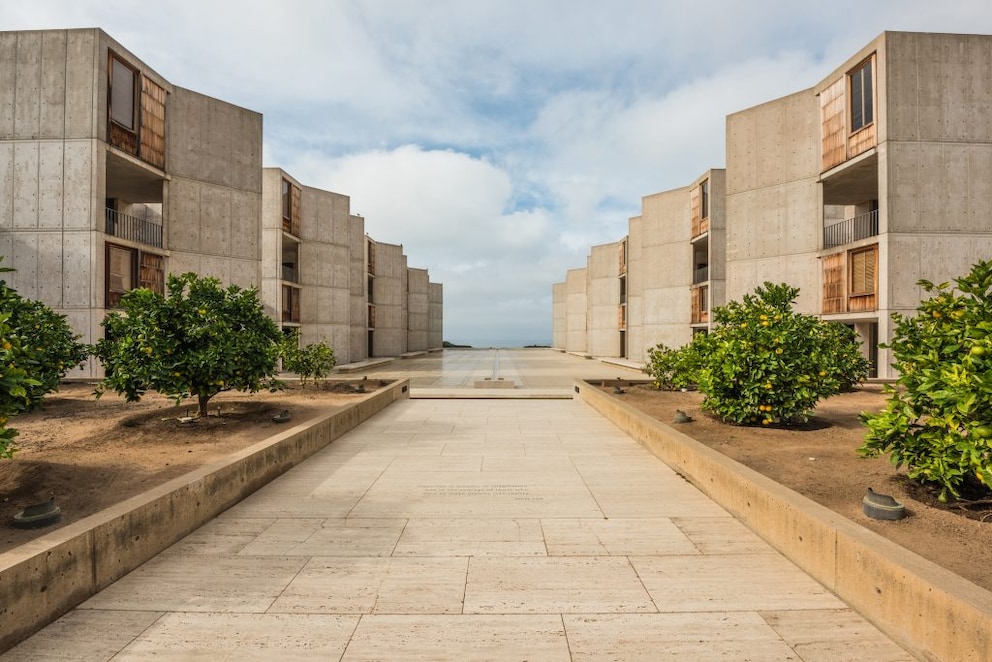
Designer brands have also rediscovered the material and use it as a backdrop for their fashion, such as Louis Vuitton. The label plans to present its 2023 Cruise Collection at the Salk Institute in California, USA. The iconic building from the 1960s by architect Louis Kahn is now a research facility for bioscientists. The futuristic-looking building is dominated by travertine.
Related: The Best Cleaning Methods for Marble and Natural Stone
Travertine, Marble or Terrazzo? Which Stone Requires Less Maintenance in the Home

Interior Designer Reveals 2023 Home Trends
The Pros and Cons of Travertine
Travertine has a long history and, as mentioned, was used and appreciated by the ancient Romans. However, alongside many advantages, there are also a few disadvantages. An overview:
Pros
- Due to its large pores, travertine is ideal for sanitary areas. Absorbed water evaporates quickly, and the stone dries rapidly.
- Thanks to its natural structure and color, travertine harmonizes perfectly with other natural materials like wood or glass.
- Because of its porous structure, the natural stone is particularly lightweight, a significant advantage for both transport and installation.
- The open-pore structure is not only practical for quick water evaporation but also makes the stone slip-resistant. Therefore, it is well-suited for patio flooring or poolside.
- Although travertine is a soft stone, it is stable and durable. With proper care, it remains intact and frost-proof for many years.
- Travertine is often mistaken for marble, as the two types of stone can look very similar depending on their color. Unlike travertine, marble is not porous and has no holes. However, travertine has a significant advantage: it is much cheaper than marble in the market.
Cons
- Like other limestones, travertine is not very dirt-resistant. While suitable for outdoor use, it will likely undergo visual changes.
- The slight susceptibility to dirt also means that the limestone requires good and intensive care to maintain its original appearance for as long as possible.
- Travertine is a soft stone that is stable but yields slightly under pressure, such as with a knife. Therefore, it is not ideal for kitchen countertops.
Where Travertine Can Be Used
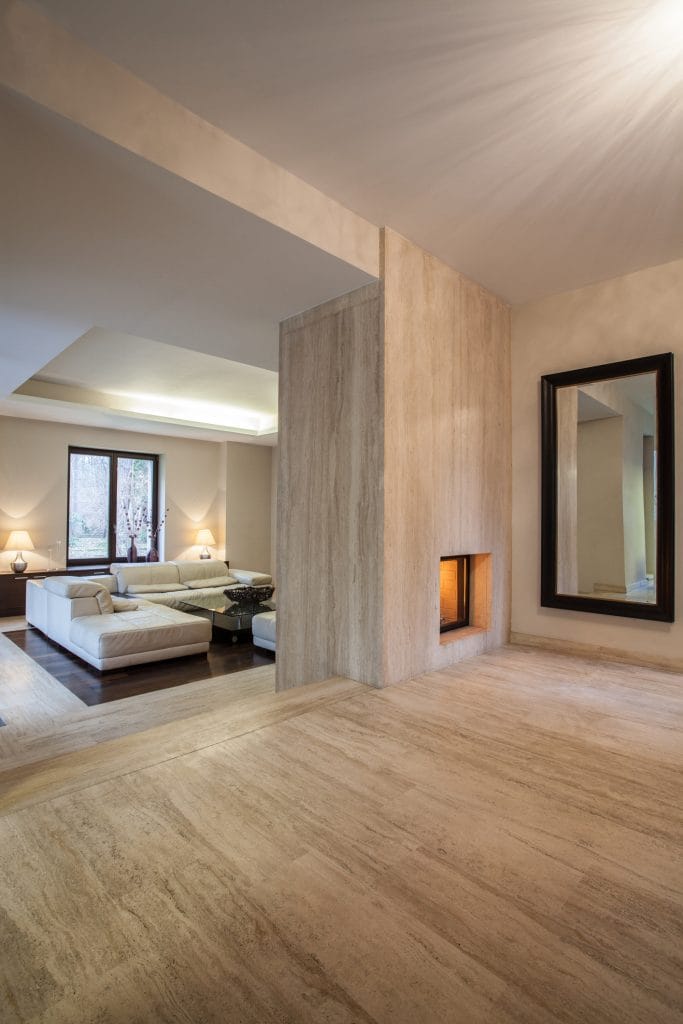
Travertine can be used in a variety of ways in architecture and interiors. The stone is suitable for almost any room. It is particularly effective if you want to give your home a Mediterranean touch. The limestone can be used in many ways:
- In the bathroom, both on the floor and on the walls. There are even bathtubs made of travertine now.
- The material also looks great in the kitchen–on the floor or as a backsplash. Sealing is important here to protect the stone.
- The limestone is particularly suitable in combination with underfloor heating–the floor retains heat better than wood and releases it slowly.
- Not only as a regular floor covering but also as stair treads, the material is effective.
- Finally, travertine is also ideal for outdoor use–as patio flooring, walkway slabs, for wall design, or as pool edging.