


December 17, 2022, 4:51 am | Read time: 5 minutes
The Swedish house is currently enjoying steadily growing popularity. Recognizable by its characteristic red paint, it is almost unmistakable. We explain where the trend comes from and what to consider when building in this article.
A cozy Swedish house is a dream for many. They are compact, beautiful, and simple–yet have that certain something. But not every red house can be called a Swedish house. There are distinctive features that make it unmistakable. What is behind the Scandinavian construction style?
Table of Contents
What is a Swedish house?
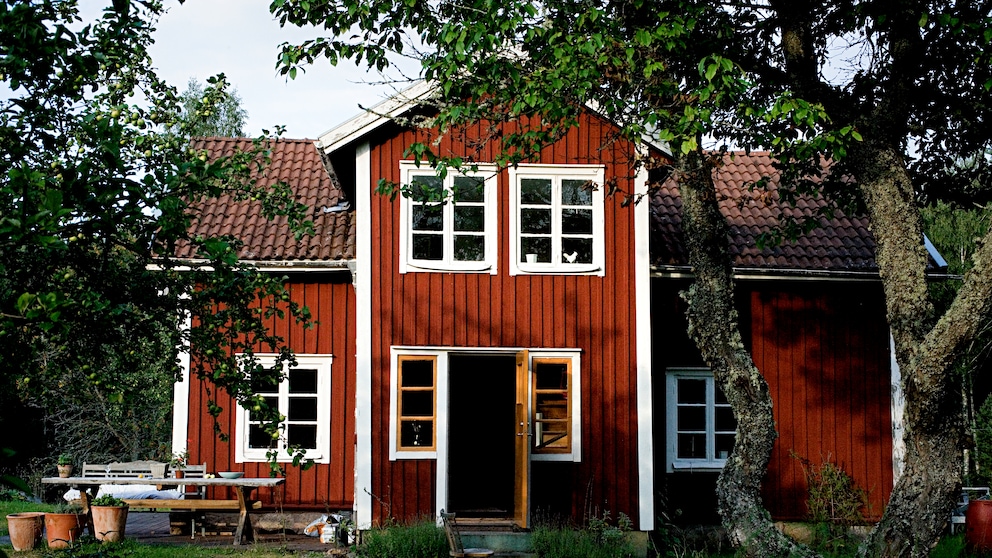
The red houses from Sweden exude coziness and comfort. The Swedish living style is often associated with sustainable building. The red houses are constructed in a natural way using wood. The wooden facade is usually installed vertically and painted red.
The Swedish house offers an additional color contrast. Windows and beams are usually designed in white. This is a typical identifying feature of a Swedish house. In addition, there are roof gables and canopies that are placed over the entrance.
Also interesting: How to save heating costs with a wooden house
Where does the trend come from?
After World War II, practical and quickly erected Scandinavian prefabricated houses were used for reconstruction. Subsequently, the export hits from Sweden were in high demand in Germany. Over time, however, other construction methods became established, and the Swedish wooden house fell into oblivion. Today, the trend is clearly recognizable again. It is likely due to the natural, sustainable, and fast construction method.
What color is used?
The red color has been used for a long time and is associated with a long tradition in Sweden. The color comes from the Swedish town of Falun. There, the byproduct of the local copper mine was used as a paint for the houses, hence the name Falun red. The aim was to give the wooden houses a European look and mimic brick.
Nowadays, the houses are also painted in yellow, gray, blue, and green. If you like the Swedish style, you should definitely use the common colors for the facade. This continues the tradition and brings a bit of Scandinavian living feeling to your surroundings.
What materials are Swedish houses made of?
Of course, wood is the most important material for Swedish houses. The walls consist of wooden cladding and a wooden frame. The renewable building material has additional advantages. Wood is a natural building material and does not need to be manufactured in a complex process. Moreover, wood is a solid building material that withstands high loads.
The multi-layered and environmentally friendly wall constructions in the Swedish house are also breathable. Additionally, the versatile building material impresses with excellent insulating properties. This wooden construction method can definitely save energy costs. It has also been proven that wood has a positive effect on the indoor climate, as it has moisture-regulating properties. Furthermore, the natural building material is also said to be allergy-friendly.
What to Keep in Mind When Building a House in Winter
The Features of a Hybrid House
Swedish houses in prefabricated construction
The Nordic form of the wooden house can now be obtained from some manufacturers in prefabricated construction. There are also many individual possibilities in planning. Whether single-story or multi-story–with this solid construction method, floor plans can be planned open or closed. The floor plan suggestions, which can be viewed in a catalog, can be helpful in planning. With many Swedish house providers, the floor plans can also be individually modified.
There are also different roof shapes that are typical for a Swedish wooden house. There are, among others, Swedish houses with gable roofs, hipped roofs, and half-hipped roofs. Consultants would therefore be the best alternative when it comes to efficient planning. They can be a great help in planning and detailing, especially in prefabricated construction.
The advantages of a Swedish house in prefabricated construction summarized:
- Sustainability: This aspect can also be well integrated into prefabricated construction.
- Aesthetics: A Swedish house is always a timeless eye-catcher that radiates warmth and coziness.
- Short construction times: Prefabricated construction saves time.
- Energy: The red wooden house is energy-efficient.
- Living comfort: Healthy living and a pleasant indoor climate.
Note: Of course, the wooden houses are also offered turnkey. However, some builders want to get involved themselves. This saves money and also gives a good feeling of having contributed to the house construction.
Also interesting: Is the container modular house a sensible alternative to the classic home?
How much does a Swedish house cost?
The material price alone is important, but individual wishes can further drive up costs. Additionally, other factors play a crucial role. Before starting planning, you should secure a suitable plot of land. However, land prices are currently expensive. Once you have found a suitable plot, you should consider whether a basement is sensible. Deciding against a basement can also save costs. These planning aspects should be carefully considered beforehand.
Only after gathering the most important information should you start your search. A turnkey Swedish house can be purchased for under 250,000 euros. However, size, equipment, location, and additional individual wishes also play a decisive role.
Note: As with a normal house construction, a permit must also be secured in advance for a Swedish house. Not every development plan allows the Swedish house construction method. The local building authority can certainly provide you with information on this.