


August 8, 2025, 1:03 pm | Read time: 4 minutes
Black kitchens were long considered taboo: too dark, too dominant, and too high-maintenance. But that has fundamentally changed. In recent years, they have become increasingly popular—and are now regularly featured in interior magazines and modern kitchen exhibitions. myHOMEBOOK reveals what makes black kitchens so special, why they are trending—and what to watch out for.
Overview
Customize with Black Kitchens
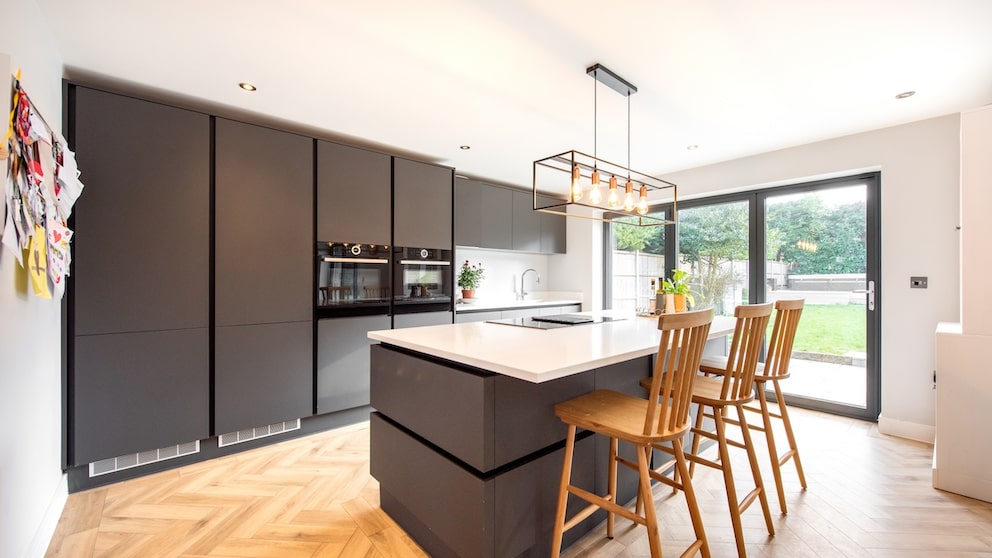
With black kitchens, you can’t go wrong. They appear simple, timeless, and can be effortlessly integrated into almost any room concept. Their simple and elegant design language, highlighted by clear lines and matte fronts, has a unique appeal.
Especially in open living concepts, they reach their full potential. They no longer have to be compact and separated in a corner. Instead, thanks to new space solutions, you can create a seamless transition between the kitchen and living area—where the boundaries blur. The new elements are more flexible, adaptable, and functional. Black kitchens are no longer just functional workspaces but an essential part of living and an expression of an individual lifestyle.
Matte Black Instead of Glossy
In the past, everything showed up on black. That’s why a black kitchen was long considered problematic. Today, however, there are many modern materials that make black fronts, whether matte or glossy, much easier to maintain. Greasy fingerprints, scratches, and dust were always an annoying problem. But with new high-tech surfaces, now offered by many kitchen manufacturers, that’s no longer an issue.
Especially when choosing matte black surfaces in the kitchen area, you can score points. They are not only dirt-repellent but also pleasantly tactile. With matte black surfaces, you can give your kitchen a velvety look that comes out even more beautifully in combination with clear shapes and handleless fronts.
Small Spaces Work Well
For a long time, it was believed that dark colors make rooms appear smaller. Today, we know that dark colors actually fit better in small spaces than one might think. They reflect little light and make corners disappear, which makes the room appear larger. Therefore, a black kitchen doesn’t have to be planned primarily in large living kitchens.
On the contrary: In small apartments with an open living concept, you can create targeted areas by arranging dark kitchen fronts mainly on one wall. This creates a design bracket that stands out from the rest of the room. A particularly good effect can be achieved by designing the countertop of the kitchen island in a slightly lighter color. If you prefer more contrast, you should use a white countertop.
Also interesting: In 3 Steps to the Right Color for the Kitchen
5 Tips to Modernize Your Kitchen

7 Key Kitchen Trends for 2026
Black Combines Well with Other Materials
Black kitchens can be designed in many ways. Whether with natural materials like wood, with concrete, with brass, or even with bold colors. Dark kitchen fronts provide an ideal canvas for exciting contrasts. If you like it warm and cozy, you should combine black kitchens with oak wood. If you love the rough industrial look, you can perfectly underline the ambiance with concrete countertops.
If you like the Japandi style, you can design the kitchen with brown natural stone slabs in a natural and calming way. Following the motto “Less is more.” However, if you prefer Scandinavian lightness, you should emphasize the dark kitchen with whitewashed woods.
Conscious Design with Light
The darker the kitchen, the more important the design with light becomes. That’s why daylight is ideal—but targeted lighting can also help brighten the kitchen. LED spots, indirect lighting under the wall cabinets, or pendant lights over the kitchen island can make the room brighter and give it structure.
Especially when planning a dark kitchen, it’s crucial to examine the lighting topic early on. Only a well-thought-out lighting plan ensures that not only the atmosphere is right, but also that there is enough light. Particularly in work areas, where good lighting can significantly ease cooking.

Enhance Your Kitchen with Black Paint
“With black paint, you can enhance your kitchen. I gave my formerly beige kitchen a completely new coat with matte black paint. The result was impressive. The kitchen looked completely new afterward. It was a lot of work, but it was worth it. Of course, black kitchens require a bit of courage, but if you embrace it, you’ll be doubly rewarded. It’s not only functional but also a real eye-catcher!”