


September 30, 2023, 4:01 am | Read time: 4 minutes
The key to a long, fulfilling, and healthy life lies in happiness. Where better to understand this than in Japan? After all, the country is home to the world’s oldest people. It’s no coincidence: Here, people live according to the philosophy of Ikigai. myHOMEBOOK author and interior designer Odett Schumann has taken a closer look at this trend.
According to recent data, there are currently more than 92,139 people in Japan who are 100 years old or older. The trend has been rising for 53 years, setting a new record each year. It is said that a happy life also leads to a long life. This is a philosophy the Japanese population has always strived for: Ikigai. Its fundamental pillars can also be applied to home design and can contribute to increased life satisfaction. But what exactly is understood by Japan’s unique way of life? And how can it be applied to living spaces?
The Japanese Path to Happiness
Translated from Japanese, “iki” means “life” and “gai” means “reason.” Essentially, Ikigai means all that is worth living for. More importantly, Ikigai holds the key to a long, fulfilling, and healthy life. The traditional philosophy dates back to the Heian period (794-1185 AD) and was largely absent from the population for a long time until it came back into focus globally a few decades ago.
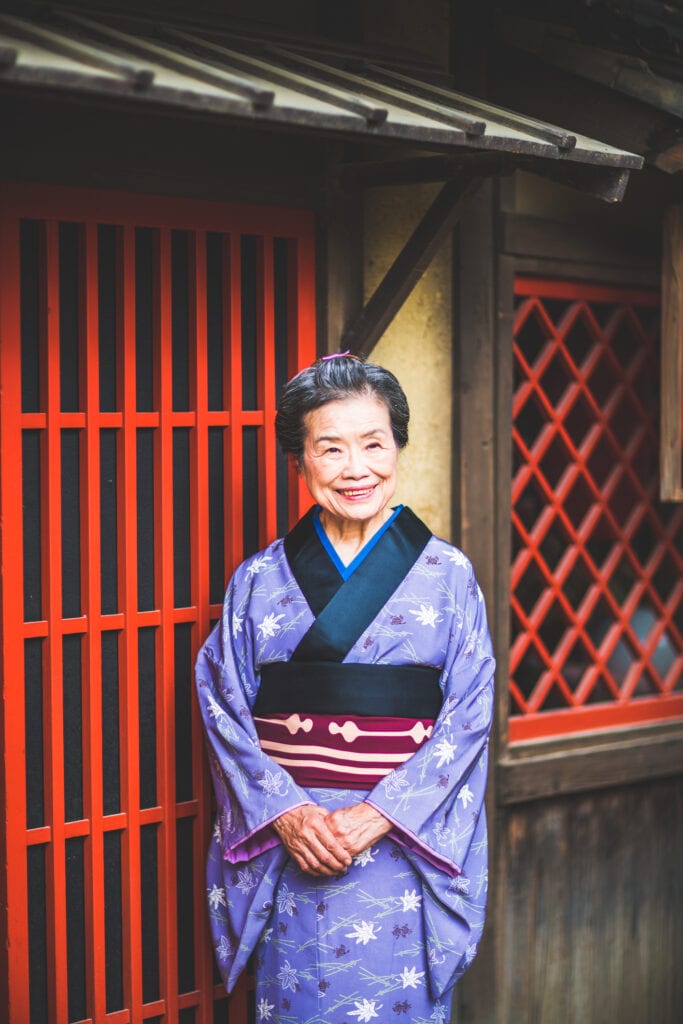
Particularly on the Japanese island of Okinawa, people consciously live by the philosophy of Ikigai. Because it has the highest rate of centenarians in the world, the island is aptly called the “Land of the Immortals.” However, anyone who thinks these elderly people lead inactive lives is mistaken! Most remain active into old age by continuing to work.
Ideally, these are activities that make the individual happy and are therefore fulfilling. Because that is exactly what Ikigai is about and what is supposed to lead to a long life.
The Meaning of One’s Own Life
In a world that is now digitally oriented in countless areas and involves a lot of time spent on smartphones, tablets, or PCs, there is a risk of distraction and even complete overstimulation. Accordingly, we often long for peace and relaxation as compensation.
This leads to questions like: What is the purpose of my existence? What truly makes my life worth living? And what exactly makes me happy? According to Japanese philosophy, everyone has their own unique Ikigai. To discover this individual motivation for personal progress in life, one can answer four central questions.
4 Central Questions About Ikigai
In the search for one’s own Ikigai, it can be worthwhile to listen inwardly and find answers to the following four central questions:
- What do you love?
- What does the world need from you?
- How do you earn your money?
- What is your talent?
It is advisable to create a list for each of the four questions. All points that are part of each list and thus form intersections are the things in life that truly make you happy. In these intersections lies your personal Ikigai. From now on, your personal focus should rest on these aspects.
These intersections are also based on four different basic needs:
- Passion: Answer to what you love
- Vocation: Answer to what the world needs from you
- Profession: Answer to how you earn your money
- Mission: Answer to what your talent is

Decluttering According to the Happiness Principle Like Marie Kondo

Design and create a paradise garden
Living According to Ikigai
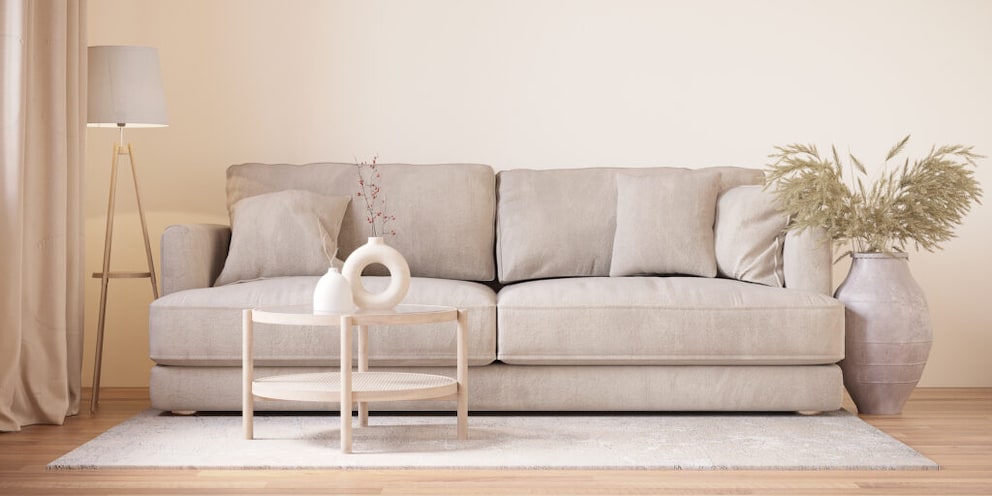
According to the idea of Ikigai, life is about always maintaining both inner and outer harmony. To fulfill the latter, spaces are needed that have a calming, relaxing effect on us. Such an ambiance can best be created through the following parameters:
- Timeless design
- Minimalist look
- Organic shapes
- Natural colors and materials
If all these factors are considered in furnishing, the optimal foundation for more harmony with oneself and the world is provided. Moreover, a home can emerge that exudes lightness, vitality, but also relaxation and harmony.
There is no need for perfection, just more focus on the essentials. Therefore, only things that are truly needed and appreciated in life should be part of the household and surround you daily: fresh flowers, pictures of loved ones, travel souvenirs, or the beloved yoga mat. So away with everything that only unnecessarily distracts in life!
Also interesting: How to Decorate in Japandi Style?
Simple Everyday Practices
What else can you do to walk through your own life healthy, happy, and content? The philosophy of Ikigai recommends some simple practices that can be easily integrated into everyday life:
- Mindfulness
- Spending time in nature
- Gratitude
- Focusing on the positive in life
- Being in the moment
- Letting go of negativity
- Mental and physical activity
- Me-time
- Avoiding stress