


March 21, 2026, 11:28 am | Read time: 4 minutes
A music room is not just a place to linger; it is a resonating chamber for creativity, emotions, and expression. Those fortunate enough to design such a space create more than just four walls for their instruments—they compose a complete experience. myHOMEBOOK reveals what matters.
A successful music room is like a well-tuned instrument: Every element contributes to the final sound—from the light source to the furnishings. Taking the time to design it thoughtfully rewards you with a space that shapes and makes music tangible.
The Furnishings
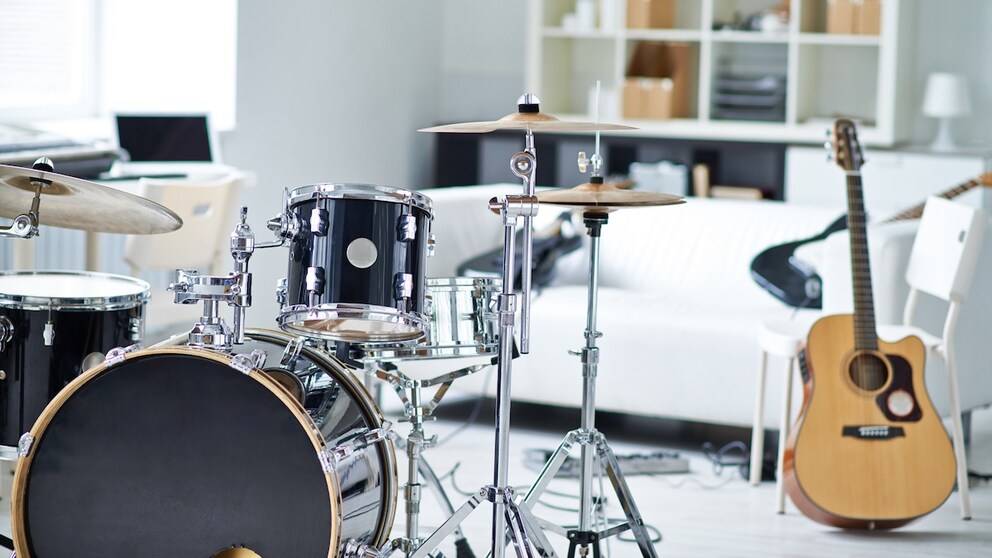
Much like in a showroom, a music room is about one thing: stepping back graciously and putting the main actors in the spotlight. Therefore, when it comes to furnishings, less is clearly more. Instruments need space, not just physically but also visually. They should not be squeezed between shelves and seating, but should breathe freely to unleash their sound.
Storage is essential in a music room, but it should be used discreetly. Minimalist shelving systems, for example, offer the perfect place for sheet music and notes, and cables and other accessories can be neatly stored here. It should be easily accessible yet visually calm to not disrupt the creative flow. Speaking of which, an inspiring color palette that promotes concentration and clarity while reducing stress is ideal. A neutral base of beige, off-white, or light gray pairs well with accents in warm blue, balancing green, or energizing yellow. No matter which design you choose in the end, colors should be used sparingly to avoid overwhelming the space. Since music is also meant to be experienced, a small lounge area with a chair and table is a good idea, depending on the room’s size.
6 Common Mistakes When Setting Up the Dining Room

3 Tips for Designing a Unique Ceiling
The Acoustics
No matter where you are in the world, when you enter a concert hall, you’ll notice how omnipresent the natural material wood is in music, not only in the construction of instruments but also in the design of musical spaces. In fact, this renewable resource positively affects sound quality thanks to its fine pores and irregular fibers. Its structure changes how sound waves move in the room, how they are reflected, and how they are absorbed. Wood can also resonate, contributing to a fuller and rounder sound. The atmosphere also determines how we perceive tones. While light woods give the room a visual lightness, darker options provide a certain depth. In general, wood is perceived as organically warm, creating an intensely positive feeling.
While wood becomes the secret star in the music room, metal and glass should be avoided as much as possible. Due to their physical smoothness, they cause sound to be harshly reflected, creating flutter echoes. Unlike wood, there is little absorption and scattering. As small design elements, they are fine, but they should always be complemented with textiles, wood, and acoustic panels.
Acoustic panels are the sound directors in the room. They intervene where a music room naturally has weaknesses, smoothing them out. They absorb sound waves, shorten metallic reverberation, and ensure a precise sound image.
The Lighting
Because the mood of any room changes with every note, the lighting should also be adaptable. Direct, harsh light can quickly make the room feel sterile, which is rather off-putting. However, too dim lighting makes it difficult to concentrate and can be soporific. Therefore, a well-thought-out concept is essential in a music room. A layered lighting design is the ideal solution. In addition to warm ambient lighting, reading lamps or indirect light sources should be placed strategically. They create an intimate, cozy atmosphere and invite you to linger. Since a music room rarely serves just one function, sometimes becoming a rehearsal space and other times a studio, the lighting should be adaptable, meaning dimmable. Additionally, paper or fabric lampshades provide better sound than bare lights. A detail you can see—and hear.