


August 21, 2026, 9:39 am | Read time: 3 minutes
It’s inevitable that apples become mealy over time. However, it can be delayed. We explain how mealiness develops in apples and what you can do to keep your apples as crisp and juicy as possible for as long as possible.
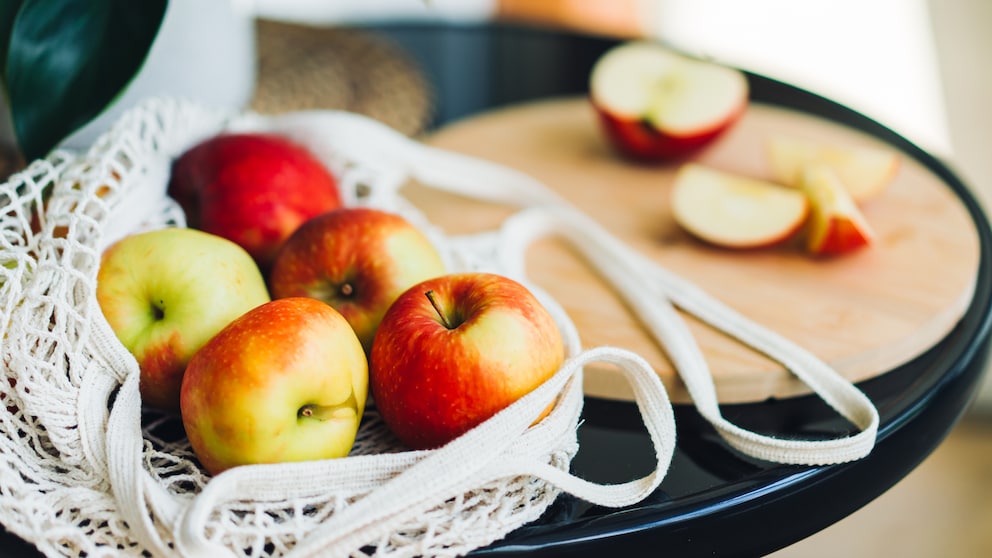
Apples should crunch and squirt. If they are dry and crumbly, hardly anyone wants them in their mouth. You might think the apples have gone bad, but they haven’t. Apples becoming mealy has nothing to do with spoilage but with the ripening process that occurs naturally inside the fruit. A mealy apple is too good for the compost bin—unlike a rotten one. Such an apple has simply lost its firmness.
Mealy Apples and Pectin
Every apple consists of thousands of cells. Similar to how mortar binds bricks, a glue ensures that the individual cells hold together. It is mainly composed of pectin, the same substance you probably know from the kitchen as a gelling agent for jam. During the ripening process, the pectin gradually dissolves, so the connection between the cells is no longer stable. This process is driven by ethylene, a natural ripening gas in plants. An apple that already feels softer when lightly pressed than the others is usually more ripe and releases more ethylene, which can further accelerate the ripening of its neighbors.
When you bite into a fresh, plump apple, your teeth tear the cells apart, causing the juice to squirt out. We experience this as the delightful crunch with a splash. However, if the ripening process has progressed to the point where the cells are no longer stably connected, your teeth no longer tear the cells apart but merely separate them. This creates the crumbly-dry feeling in the mouth.
Temperature as a Ripening Driver
The speed at which the ripening process progresses depends on the ambient temperature. Warmth significantly accelerates it: An apple that sits at room temperature in the fruit bowl ripens noticeably faster than one in a cool cellar or the refrigerator. To keep your apples as crisp as possible for as long as possible, store them cool, ideally between zero and four degrees Celsius.
The harvest time also plays a role. If apples hang on the tree too long, the breakdown of pectin begins before harvest, and the apple becomes mealy before it even lands in the harvest basket. Experts therefore distinguish between picking ripeness, the optimal harvest time, and eating ripeness, the moment when the apple tastes best. For some varieties, these are close together, while for others, they are weeks apart.
How to prevent potatoes from sprouting

Can Green Strawberries Ripen?
These Varieties Stay Crisp–These Don’t
Besides storage and harvest time, the variety itself also determines how quickly an apple becomes mealy. Early summer apples like Klarapfel, James Grieve, or Summerred are sprinters, not long-distance runners: meant for quick enjoyment, not for months of storage. It’s in their DNA. Those who harvest or buy summer apples should eat them soon or process them immediately into apple rings, compote, sauce, or cake. Storage varieties like Braeburn, Topaz, or Idared naturally have more patience and remain pleasantly firm for months at the right temperature.
What Can You Do with Mealy Apples?
If it happens that your apples have become mealy and are no longer suitable for direct consumption, it’s not a disaster. Processed into sauce or compote, baked in a cake or crumble, pureed with banana and green leafy vegetables, or stirred into pancakes in pieces, they still taste good.