


September 29, 2026, 4:49 am | Read time: 4 minutes
Once the leftovers of the Bolognese sauce are poured in, the plastic container permanently bears unsightly stains. Even thorough washing often helps little. myHOMEBOOK asked the Federal Institute for Risk Assessment (BfR): Where do the stains come from? Do they harm health? And when should such a discolored plastic container be discarded?
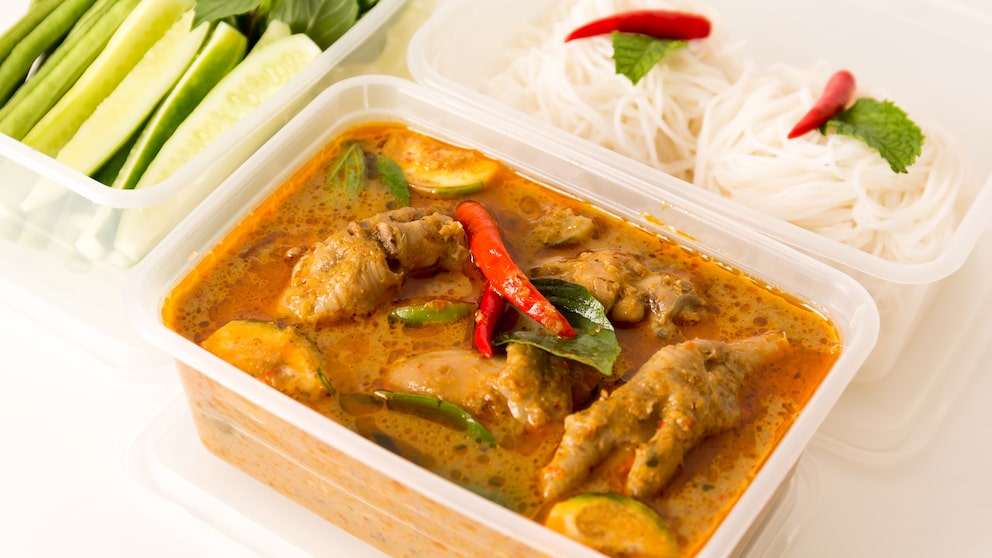
The remnants of the Sunday meal go into the container, which then ends up in the fridge. Two days later, everything is eaten, but the stains remain in the container forever. Tomatoes, carrots, and beets leave particularly stubborn marks. Curry dishes also stain the surface. The dye curcumin from the spice turmeric is partly responsible.
Follow myHOMEBOOK on WhatsApp now
Dyes Settle on the Surface
The cause of discoloration lies in the food itself. Foods contain dyes. These adhere to or penetrate the plastic surface. Thomas Tietz, head of the “Safety of Food Contact Materials” group at BfR, compares the process to stains on hands or clothing. Those who frequently peel carrots or beets know the problem. A plastic container discolors in the same way. “The plastic itself is not changed,” Tietz emphasizes when asked by myHOMEBOOK.
With tomatoes and carrots, a look into chemistry helps: Their red and orange dyes belong to the carotenoids. Lycopene from tomatoes is part of this group. Lycopene does not mix with water. Therefore, the substance seeks other adhesion points, such as the inner wall of a plastic container. Due to this water-repellent property, dishwater is ineffective against the stains.
Even tiny amounts are enough. According to BfR, the dyes from tomatoes, carrots, or beets are often visible in very small quantities. How strongly a plastic container takes on color depends on the material. Very soft plastics like polypropylene are particularly affected. Silicone also easily takes on color. Additionally, a rough surface promotes stains.
Also interesting: What ever happened to Tupperware?
Unsightly but Harmless
The good news: “A taste impact is not expected, nor is a health impact,” says Tietz. The BfR advises normal, thorough cleaning according to the manufacturer’s instructions. If discoloration remains afterward, it usually does not stain the next stored food.
Tietz considers exceptions possible. A reddish discolored silicone mold could slightly stain when baking. “However, it is also unproblematic in terms of taste and health.” However, the BfR recommends “replacing plastic containers, especially when the surface is heavily damaged, such as scratched or chipped.”
By the way: Yellowish plastic has nothing to do with food. Here, the UV light of the sun acts. It changes certain plastics. The result is usually a slight yellowing, according to BfR. Unlike tomato stains, the material itself changes in this case.

Foods You Shouldn’t Wrap in Aluminum Foil

Simple Trick Removes Grease from Food Storage Containers
How to Avoid Stains
Otherwise, the BfR advises using hard plastics with a smooth surface. This material discolors less strongly. Thomas Tietz’s final tip elegantly solves the problem: “On dark-colored plastic, stains are much less noticeable than on white or transparent ones.”
Heat intensifies the discoloration. For example, the high temperatures in the dishwasher drive the stains deeper into the plastic. When reheating food in the microwave, it is better to use plates or bowls made of glass or ceramic.
Online, there is also the tip to fill plastic containers only with cooled food. The dyes would then penetrate the plastic less deeply. However, this does not protect against discoloration in the long run. Another online suggestion is to spray the inside of the container with a little oil beforehand. The lycopene might then find a different hold than the plastic. However, this method also only postpones the problem.
Also interesting: 6 tips to help with discolored plastic boxes
Alternatives to Plastic Containers
Of course, there is no need for plastic. For staining foods like curry, tomato, or paprika, glass or stainless steel is recommended. Glass is easy to clean, dishwasher-safe, and does not absorb odors. With glass containers, it is also easy to see what is inside. However, glass is heavy and not shatterproof, which is a problem when the glass is fully loaded and placed in the freezer.
Stainless steel also withstands falls and does not discolor. However, the material is unsuitable for the microwave. Otherwise, enamel containers are suitable. Their glass-like coating is easy to clean but tends to chip when bumped. Bowls made of porcelain or ceramic with matching lids are also suitable for storing food.