


December 8, 2025, 4:02 pm | Read time: 4 minutes
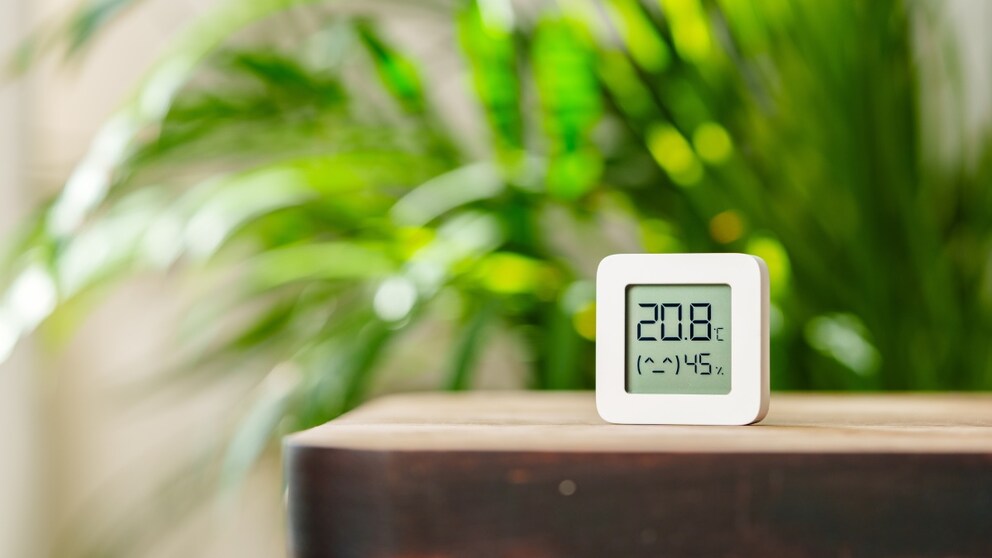
Hygrometers are practical gadgets for the home that can indirectly prevent mold growth. They provide an instant reading of humidity levels and indicate when it’s time to ventilate. A recent test reveals the best devices.
A balanced indoor climate is not only pleasant but also helps save energy and protect the building’s structure. Infrequent ventilation or improper heating can quickly lead to damp walls or dry air, which can strain mucous membranes and furniture. A hygrometer helps monitor temperature and humidity—especially during the heating season or in rooms that cool down easily. These small measuring devices reliably indicate when ventilation is advisable and whether the indoor climate remains healthy.
How Does a Hygrometer Work?
A hygrometer measures the humidity of indoor air using a sensor that reacts to moisture and converts this change into a measurement. Digital models often combine this humidity sensor with a temperature sensor, displaying both values simultaneously.
The device only requires a battery and operates without complicated settings. Once placed or hung in a room, it continuously measures the current humidity and usually detects fluctuations quickly. This allows you to assess whether the indoor climate remains stable or if action is needed—such as ventilating, heating, or humidifying.
Also of interest: 4 Mistakes That Can Lead to Mold in the Home
Hygrometers in Test–The 3 Best Models
A recent test by Computer BILD (also part of Axel Springer) shows which hygrometers are particularly reliable and offer practical features. The following three models performed most convincingly.
1. Govee Smart Thermo-Hygrometer (H5075)
The device from Govee (test score 1.8) measures both temperature and humidity and responds very quickly to changes in moisture. The app connection is practical, allowing you to view trends and set individual thresholds. The display is simple but well-structured, making the most important data easy to read.
In everyday use, the hygrometer scores with easy setup and a stable connection to the app. Its compact design fits easily into any room and is particularly suitable for households that like to monitor their indoor climate over a longer period.
2. Xiaomi Mi Temperature and Humidity Monitor 2
Xiaomi (test score: 1.9) also relies on a smart concept that combines temperature and humidity measurement with an app. The device quickly indicates changes in humidity and reliably responds to temperature fluctuations. The display is simple, but the readout is rather small, which can be a disadvantage in large rooms or from unfavorable angles.
In daily use, the digital logging via the app is particularly convincing, making developments visible and helping to assess the indoor climate. Its flexible use and compact form make the model well-suited for living and bedrooms.
3. ThermoPro TP49
For those who prefer a simple device without an app, the ThermoPro TP49 is a solid solution for indoor use (test score: 1.9). It quickly measures temperature and humidity and provides clear readings on an easy-to-read display. Particularly practical in everyday life: The model can be placed, magnetically attached, or mounted on the wall.
A small comfort indicator also helps to directly interpret the values. This makes the hygrometer ideal for households that want uncomplicated control of the indoor climate without additional features or smartphone connectivity.
Bosch Twinguard in Review: What Can the Smart Smoke Detector Do?
Power Meters Tested – Even Affordable Models Can Impress
How the Test Was Conducted
For the comparison, the hygrometers were installed and observed in various temperature and humidity ranges. The key factors were how quickly the devices responded to changes and how stable they operated under different conditions. Usability was also considered: from the readability of the display to the use of additional functions and handling in daily use. Additionally, setup and mounting options were reviewed to comprehensively assess practicality.
Conclusion
A hygrometer is worthwhile for anyone who wants to manage their indoor climate more consciously—whether to prevent mold, relieve respiratory strain, or save energy. It’s important to ensure good readability and a reliable response to humidity changes. Models with apps offer additional evaluations but are not strictly necessary. For simplicity, choose a device without smart features. Ultimately, the key is that the hygrometer suits your living situation and is used regularly to keep temperature and humidity in a healthy range.