


June 12, 2026, 3:31 pm | Read time: 4 minutes
Zucchini is among the most popular vegetable plants in home gardens. It grows quickly, often providing abundant yields over weeks, and is generally considered easy to care for. However, many hobby gardeners make watering mistakes that can directly affect the health of the plants and the subsequent harvest. Since zucchini have a relatively high water requirement, they are particularly sensitive to improper watering. myHOMEBOOK gardening expert Franka Kruse-Gering reveals six common mistakes when watering zucchini.
1. Mistake: Watering Too Infrequently
Zucchini plants need a lot of water throughout their lives. Especially in summer, when temperatures remain high for extended periods, the large leaves evaporate a lot of moisture. If watered too infrequently, the plants quickly become stressed and grow more slowly. The leaves often appear limp and hang visibly down despite healthy roots. Additionally, the plants produce fewer fruits, and already set zucchini often grow more slowly, remain significantly smaller than expected, or simply fall off.
2. Mistake: Giving Only Small Amounts of Water Daily
Not only the regularity but also the method of watering plays an important role. Many hobby gardeners water their zucchini regularly, but only moisten the top layer of soil. The water does not penetrate deeply enough into the ground and does not adequately reach the roots. As a result, the roots develop mainly near the surface, where the soil dries out particularly quickly. On hot summer days, the plants therefore become stressed more quickly and need to be watered more often. It is better to thoroughly soak the soil with each watering so that the water reaches the entire root area. This way, the plants can better withstand short dry periods.
3. Mistake: Getting the Leaves Wet While Watering
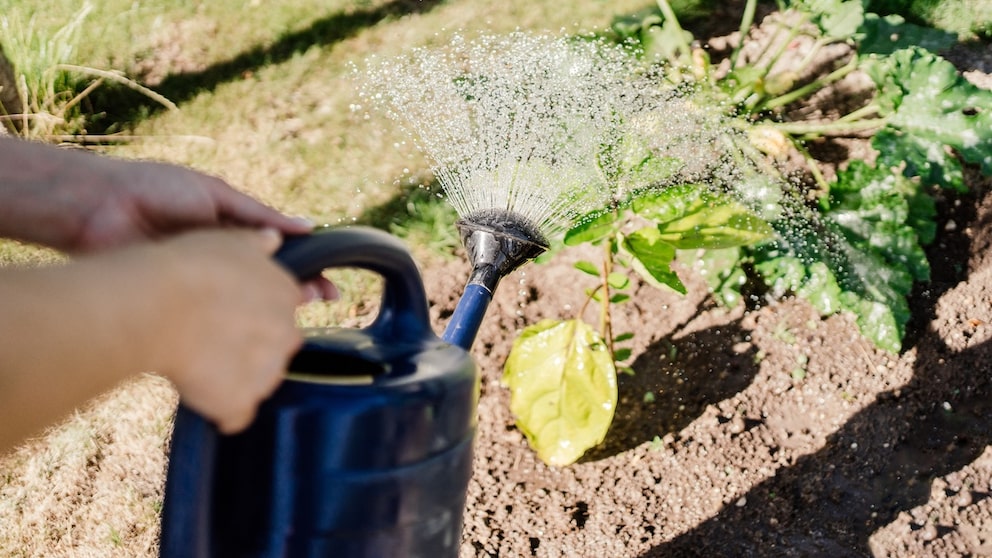
Another common mistake is watering the entire plant from above. This not only wets the roots but also the large leaves and sometimes even the flowers. Especially on warm days or in high humidity, this can promote the spread of various fungal diseases. Powdery mildew is particularly common in zucchini and can significantly weaken the plants.
Additionally, the large leaves can catch or divert some of the watering, resulting in much less water reaching the root area than intended. Especially with mature plants, this can lead to surprisingly dry soil under the plant, even though plenty of water was applied.
4. Mistake: Watering During the Midday Heat
While the plants’ water needs are high when the sun is at its peak, this is not the best time to water. Some of the water evaporates on the soil surface before it can even reach the roots. As a result, significantly more water is needed to achieve the same effect. Additionally, the plants are already stressed by the heat, so large temperature differences between the soil and the watering can be unfavorable. Early morning is much better, as the plants then have enough time to absorb water and prepare for the day’s heat.

Why Zucchini Rot at the Tip

These 6 Mistakes Especially Harm Balcony Tomatoes
5. Underestimating Waterlogging
Although zucchini plants need a lot of water, this does not mean they want to stand in wet soil permanently. If excess water cannot drain away, it collects in the root area and displaces the vital oxygen. The result can be damaged or rotting roots, which means the plant is poorly supplied despite moist soil. Yellow leaves, growth disorders, or an overall sickly appearance are common signs. Particularly heavy and compacted soils should therefore be loosened with compost or sand before planting.
6. Not Watering Enough During Fruit Development
Many hobby gardeners pay close attention to water supply at the beginning of the season, but become more negligent later. However, during fruit development, the water needs of zucchini increase significantly. The plants must now not only supply leaves and roots but also develop numerous fruits simultaneously. If water is lacking during this phase, young fruit sets can turn yellow and fall off prematurely. Already growing zucchini often remain smaller and do not reach their typical quality. A consistent water supply is therefore crucial for a successful harvest during this time.