


May 30, 2026, 10:27 am | Read time: 3 minutes
Baking soda is currently recommended in many gardening forums as a simple remedy against the box tree moth. The idea seems plausible at first glance, as the substance is used in various ways in the garden. But does it really help against the moth?
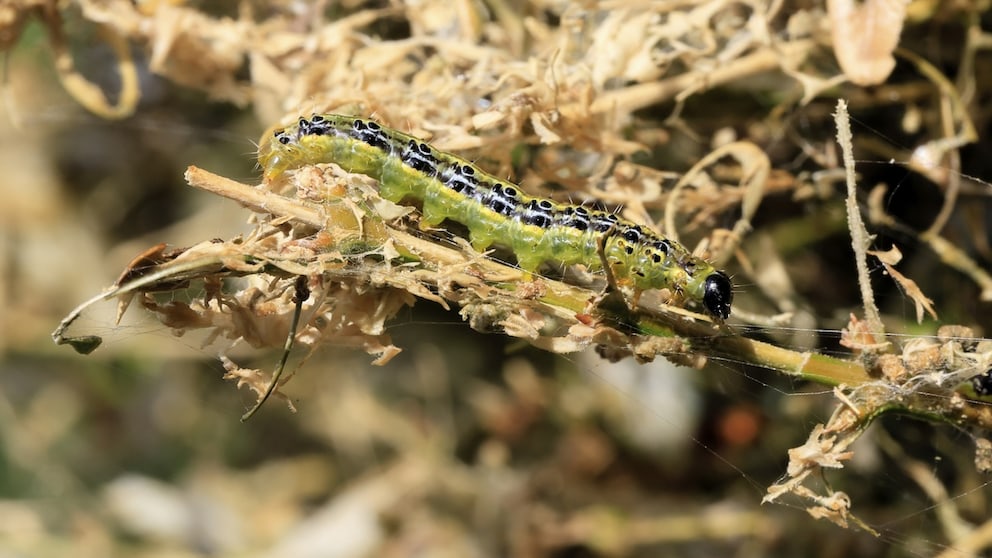
The box tree cannot be rushed. It grows slowly, only a few centimeters a year. Those who have it in their garden trim and nurture it over the years into its intended shape. Cut by cut, it is continually refined and corrected. And then comes the moth. A small caterpillar that eats its way through the shrub from the inside as if it were nothing. As a possible countermeasure against this voracious pest, baking soda repeatedly appears online. A home remedy that offers solutions for everything from refrigerator odors to cake batter.
How Baking Soda Works
Baking soda is alkaline and can change the pH level on leaf surfaces. Therefore, it is primarily used in the garden against certain fungal diseases. However, this mechanism does not work in the same way with insects like the box tree moth.
The Julius Kühn Institute, the Federal Research Institute for Cultivated Plants, assesses its potential effectiveness cautiously. In response to an inquiry from myHOMEBOOK, it states: “Baking soda can irritate the digestive tract or the outer shell of the larvae. However, a very large amount would need to be ingested. There are no reproducible experiments on its effect on the box tree moth.”
How Baking Soda Is Used
If you want to try baking soda despite the shaky research situation, you can proceed as follows: Baking soda is dissolved in a liter of water and the solution is sprayed onto the plant. Dosage recommendations vary widely–a common starting point is a teaspoon per liter of water. Spraying should be done as early in the season as possible, as soon as the first webbing appears. Those who wait until feeding damage is visible usually face older, more resilient larvae. By then, baking soda is too late anyway.
When Baking Soda Harms the Plant
With incorrect dosage, baking soda harms precisely where the moth has already struck. The plant then fights on two fronts: against the caterpillars’ feeding and the additional stress from the remedy itself. The Julius Kühn Institute warns clearly: “High concentrations can lead to leaf damage, disrupt water absorption, and stress the roots.”
The Secret Behind the Trash Bag Trick Against the Box Tree Moth
How to Combat the Box Tree Moth in Your Garden
How Bacillus thuringiensis Works Against the Box Tree Moth
What baking soda cannot achieve, Bacillus thuringiensis does effortlessly. This bacterial species, naturally found in soil, produces so-called Bt toxins, which are poisons that specifically target box tree moths and other pest insects. The Bt products available on the market are sprayed onto the plants and ingested by the larvae while feeding. In the larvae’s intestines, they take effect and stop food intake. The Julius Kühn Institute confirms: “These products have proven effective for control—younger larvae die within a few hours, older ones within one to two days.” Baking soda cannot achieve this as a sole remedy. Those who wish to avoid Bacillus thuringiensis can opt for neem tree extracts.
The Right Time for Bacillus thuringiensis Application
Pheromone traps catch the male moths and indicate when the flight period begins. Shortly after, the females lay their eggs, and soon the first larvae hatch. During this phase, treatment with Bacillus thuringiensis is most effective. In small shrubs, visible larvae can also be handpicked or sprayed off with a strong jet of water.