


May 24, 2026, 11:54 am | Read time: 4 minutes
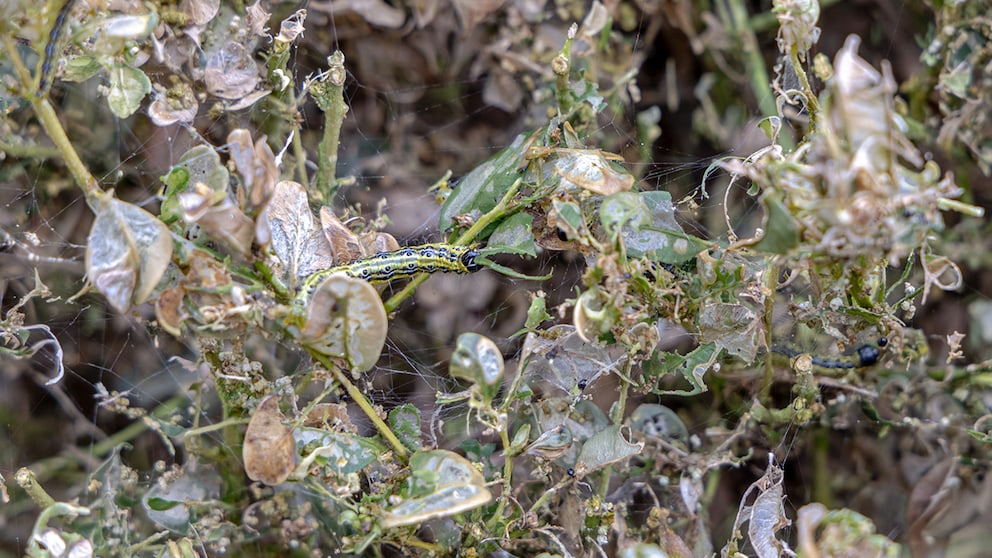
In gardens and on social media, black garbage bags are currently a common sight. Draped over boxwood trees, they are touted as an effective weapon against the box tree moth. myHOMEBOOK reveals whether the trick is more than just hot air.
Black garbage bags over a boxwood in the neighborhood: Anyone seeing this for the first time might wonder what went wrong. Nothing, because the bag has a method. The heat builds up so much under the plastic that the larvae of the notorious box tree moth are supposed to die. It sounds plausible, but it only works to a limited extent.
Creating a Heat Trap
The effect only occurs with black plastic. It significantly increases the heating because dark materials warm up more in the sun than light ones. The Julius Kühn Institute, the Federal Research Institute for Cultivated Plants, informs myHOMEBOOK: “The air under the bag can heat up to over 40 degrees Celsius on warm days—and the larvae would then die.” That’s the theory, but in practice, it’s more complicated.
Does Baking Soda Really Help Against the Box Tree Moth?

How to Combat the Box Tree Moth in Your Garden
The Limits of the Bag Trick
There are several points where the trick in the bag gets stuck. The range between effective against pests and harmful to the plant is narrow. The Julius Kühn Institute explains: “From about 40 degrees, the larvae die, but at more than 45 degrees, the plants also become stressed and damaged.” Without constantly checking the temperature under the bag, you never know where you stand. In spring, the necessary high temperatures are usually not reached, while in midsummer, they are quickly exceeded. This makes the right timing uncertain.
The application area is also limited, as the trick only works with individual, small shrubs that can be completely wrapped. The bag must be well sealed at the bottom to prevent heat from escaping. The method is not suitable for hedges from the outset. The cover should not be used for more than a day at a time. Another drawback of the method: Not only do the moth larvae die under the bag. Beneficial insects in the shrub also do not survive the heat.
The intense heating creates a warm, humid climate under the plastic, which further stresses the plant and can promote fungal infestation. From the institute’s perspective, heat damage or the ineffectiveness of the measure is the bigger problem.
More Effective than the Bag: Bacillus thuringiensis
Preparations with Bacillus thuringiensis are more reliable. This type of bacteria, which naturally occurs in soil, helps keep the moth in check even in larger boxwood populations. Preparations containing these bacteria are available in garden centers. The Julius Kühn Institute confirms: “These preparations have proven effective for control—younger larvae die within a few hours, older ones within one to two days.” Alternatively, neem tree extracts can also be used to control the box tree moth. Both preparations should only be used with strict adherence to application guidelines.
Pheromone traps indicate the right time for use. They catch male moths and mark the start of the flight period. Shortly after, the first larvae hatch. In small shrubs, visible larvae can also be handpicked. This is labor-intensive but directly effective. Just like spraying with a strong jet of water.
As a supplementary measure, the garbage bag trick can work if the shrub is the right size for a bag, the summer is very warm, and one is willing to use the bag repeatedly. However, it is not sufficient as a sole measure.