


August 26, 2026, 11:11 am | Read time: 4 minutes
The word is out: Our gardens are getting quieter. Here’s what you can do in your garden to provide an attractive habitat for garden birds. Spoiler: Many of the measures are super convenient.
The flower beds are well-maintained, bird feeders and baths are filled, and a few nesting boxes hang in the trees. An exemplary garden, one might think. Yet, there are fewer birds today than just a few years ago. Many gardeners feel this way, and the numbers confirm it.
Follow myHOMEBOOK on WhatsApp now
How significant is the decline in garden birds?
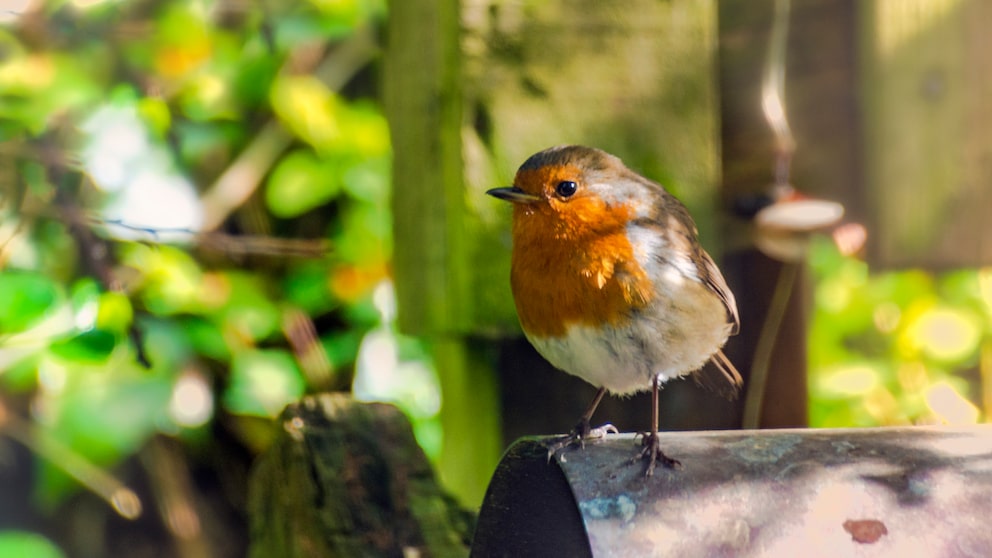
On average, 28 birds per garden. That’s the result of the “Hour of the Garden Birds” 2026. Eight years earlier, it was 34. This annual event involves nationwide counting for one hour in May by tens of thousands of volunteers in their own gardens. It’s a snapshot, not year-round scientific monitoring. Not every bird species is equally affected. For example, great tits and robins have even increased compared to the previous year.
It’s a different story for the house sparrow, the most common garden bird in Germany: It saw a nine percent decline in this count compared to the previous year. The tree sparrow also decreased. NABU spokesperson Silvia Teich explains: “It is indeed the case that over the many years we’ve been conducting our bird counts, we see a slight but continuous downward trend in the birds coming to our gardens, even though the decline in field birds is significantly more dramatic.”
Also interesting: Possible reasons why birds don’t use a bird feeder
Possible Reasons Birds Might Avoid a Bird Feeder
What Hobby Gardeners Can Do to Combat Insect Decline
Does feeding really help garden birds?
A full bird feeder seems like the most obvious help for garden birds. However, experts are divided on whether year-round feeding truly helps. Some see better breeding success, while others believe that feeding stations typically only reach ten to fifteen species, whose populations are relatively stable anyway. It is undisputed, however, that insects are irreplaceable for young birds. And they are becoming increasingly scarce.
The much-cited “Krefeld Study,” published in 2017, showed that the biomass of flying insects in German nature reserves decreased by more than 75 percent between 1989 and 2016. Almost all native songbirds feed their young with insects at least in the first days of life, regardless of what the adult birds eat otherwise. Seeds and fat food from the feeder do not replace this. However, insects do not thrive in every garden.
Dandelion – a weed to us, a hit for insects: In our view, nettles, ground elder, dandelion, and many other wild plants are considered weeds. But for insects, they are a rich food source. More than 100 species of wild bees, and about as many caterpillar and hoverfly species, visit dandelions alone to collect nectar and pollen.
Intervene less, allow more
Most birds come to the garden not for the beautiful flowers, but for the flower visitors. Exceptions are seed-eaters like house sparrows or goldfinches, which are more interested in the seeds. Gravel gardens are as useless to insects as a parking deck. Thuja and cypress hedges are no better. But even plants primarily bred for appearance, such as those with double flowers, offer little to insects. Even lawns are of little help if daisies and clover are not allowed to bloom because lawnmowers or robotic mowers cut them down faster than they can grow.
A principle runs through almost every effective measure to promote insects and thus birds: intervene less! A strip of lawn that is mowed less frequently. Weeds that are allowed to grow before being weeded. Perennials left standing over the winter. Autumn leaves left on beds or under trees and shrubs. Deadwood that is stacked instead of disposed of. And, of course, avoiding chemical pesticides or synthetic fertilizers.
This omission principle primarily creates food. But birds need more than that: cover from predators and safe nesting sites. Nesting boxes can supplement the latter, especially where natural niches are lacking. However, they do not replace a natural garden around them. Those who also plant a mixed hedge with native plants, such as hawthorn, blackthorn, and elder, offer birds the complete package: food, retreat, and nesting opportunities. A shallow, regularly cleaned water source completes the setup.