


September 26, 2026, 12:21 pm | Read time: 4 minutes
A pumpkin doesn’t need to be processed immediately after purchase or harvest. Many winter squash varieties can be stored for a longer period. However, success depends heavily on the condition of the fruit and the storage location. Heat, moisture, or minor damage can cause the pumpkin to spoil much earlier. myHOMEBOOK gardening expert Franka Kruse-Gering explains what to watch out for.
Follow myHOMEBOOK on WhatsApp now
Store Only Perfect Pumpkins
Before storing, the pumpkin should be inspected from all sides. Cracks, soft spots, or pressure damage make it more susceptible to rot. Such specimens are not suitable for long-term storage and should be processed as soon as possible.
The stem should remain on the pumpkin. If it’s missing or the base is damaged, the fruit can spoil faster at that spot. Never lift the pumpkin by the stem, as it can break off.
Related: What to consider when harvesting pumpkins
Choose a Cool Storage Location
Winter squash is best stored in a cool room. According to Ökotest, an ideal temperature range is about 54 degrees Fahrenheit. A pantry, a cool storage room, or a suitable cellar may be options. The key is not just the temperature: the storage location must also be frost-free. Ökotest explains that a refrigerator is unsuitable for storing pumpkins, as it can be too cold for them.
Avoid Moisture
Moisture promotes mold and rot. Therefore, the pumpkin should only be stored with a completely dry shell. The room itself must also not be damp. If condensation forms on the fruit or the surface, the location is unsuitable.
It’s better not to wash the pumpkin before storage. Any clinging soil can be carefully removed dry. This way, no additional moisture gets on the shell.
Also interesting: What to consider if you want to freeze pumpkin
Ensure Adequate Air Circulation
Pumpkins should be laid out freely and be able to be surrounded by air. A closed plastic bag is therefore unsuitable. Moisture can accumulate inside without being able to escape.
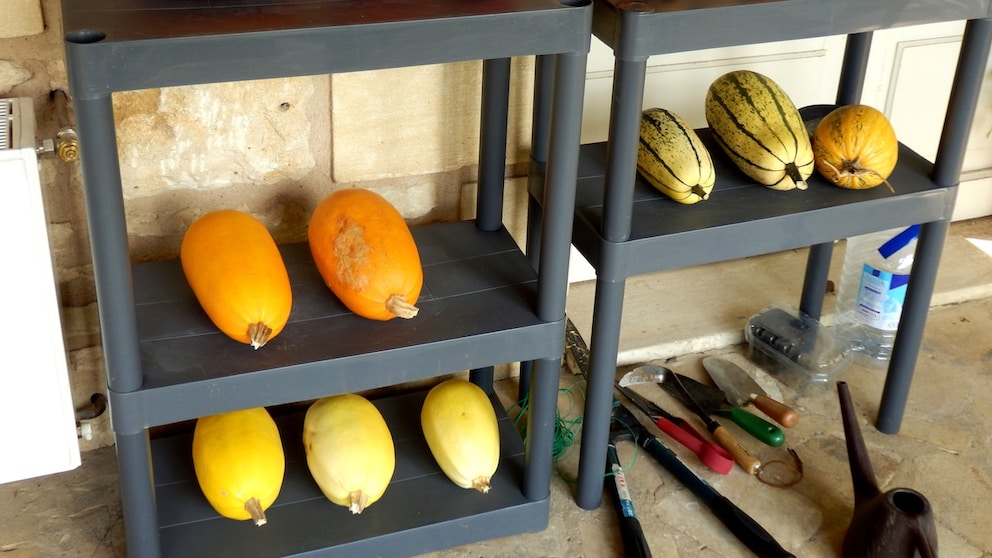
Direct placement on a cold or damp floor is also unfavorable. A dry shelf or another clean surface is better. There should be some space between multiple fruits.
Do Not Stack Pumpkins
When pumpkins are stacked, weight is placed on the lower fruits. This can cause pressure marks. At the same time, initial damage to hidden areas may only become apparent later. Therefore, pumpkins should be placed individually and side by side.
Regularly Check Stored Pumpkins
Even in a suitable location, a pumpkin can spoil. Therefore, the stored fruits should be regularly inspected from all sides. Typical warning signs are soft or sunken areas, moist spots, an unpleasant smell, and visible mold.
A suspicious pumpkin should be immediately separated from the other fruits. If only a small area is suspect, it doesn’t automatically mean the rest of the pumpkin can still be used without concern. If there is mold or clear signs of rot, the fruit should be discarded.
Also interesting: 3 ideas for using leftover pumpkin

Garden Produce You Should Use First
These 5 Mistakes Shorten the Shelf Life of Zucchini
Not All Pumpkin Varieties Are Equally Suitable for Storage
Especially mature winter squash with a firm shell are suitable for long-term storage. According to Ökotest, these include Hokkaido, Butternut, and Muscat squash. However, how long an individual pumpkin actually lasts depends on the variety, its condition, and the storage conditions. Summer squash have a more delicate shell and are not intended for months-long storage. These include varieties like Rondini or Patisson.
Store Cut Pumpkin Differently
Once a pumpkin is cut, it should no longer be stored at room temperature. The cut surface should be covered, and the piece placed in the refrigerator. Alternatively, the flesh can be frozen in portions if it cannot be used promptly.