


November 28, 2025, 9:45 am | Read time: 4 minutes
A bit of frost can work wonders. Some vegetables and wild fruits only develop their full flavor after cold nights, while others become edible only through the cold. We present eight plants that only reach their full potential at cooler temperatures.
Why Frost Changes Flavor
Cold doesn’t affect all plants the same way. In some plants, parts of the starch reserves convert into sugar, which softens harsh notes and enhances natural sweetness. The reason is simple: Sugar acts as a natural antifreeze in the cells and helps the plant better withstand low temperatures. Plants that store mainly inulin instead of starch also react to cold and often develop a milder, slightly sweet note. Others lose compounds responsible for a strong taste or become soft enough for their aroma to fully unfold due to the cold. Frost is not a stimulus that always works the same way but triggers different processes depending on the type.
While some vegetables and wild fruits benefit from the cold, they should not be harvested while frozen solid. Harvesting on a frost-free day prevents damage to plant tissue and preserves the firm structure.
Kale
Kale is perhaps the best-known winter vegetable. Frost causes some of the starch to break down into sugar, which reduces bitterness and rounds out the flavor. Traditional varieties like Westländer Winter, Lerchenzungen, or Halbhoher Grüner Krauser noticeably benefit from this. Modern cultivars, on the other hand, taste pleasantly mild even without frost. The harvest time can be handled more flexibly here. Harvesting the leaves from bottom to top allows the upper young leaves more time to grow.
Related: What to Consider When Harvesting Kale
Brussels Sprouts
Brussels sprouts experience a noticeable improvement in aroma through frosty nights. Some of the starch reserves convert into sugar, which—just like with kale—softens the harshness of the flavor. The taste becomes fuller and gains depth. The lower sprouts usually ripen first, so it’s advisable to start harvesting there.
Parsnips
Parsnips react to frost similarly to cabbage: In cold weather, some of their starch reserves convert into sugar, making the taste softer and sweeter. At the same time, they contain a significant amount of inulin, another carbohydrate form that can also contribute to flavor depth. Parsnips can remain in the ground all winter and be harvested as needed. If longer frost periods without snow threaten, a layer of fleece or mulch can protect the vegetables.
Carrots
Carrots become more flavorful after light frosts. A small portion of the starch reserves also converts into sugar, highlighting the natural sweetness. However, carrots can only withstand frosts down to minus two degrees. Stronger or prolonged frosts can damage the tissue and make the carrots mushy. Therefore, it’s worth timing the last harvest with weather changes.
Jerusalem Artichokes
Jerusalem artichokes store their energy not as starch but as inulin, a natural fiber. In cold weather, parts of this inulin convert into sugar, which is why the tubers often taste noticeably sweeter after frost. The tubers are hardy. Even stronger frost doesn’t affect them. They can remain in the ground well into winter and even be harvested in spring.
Medlars
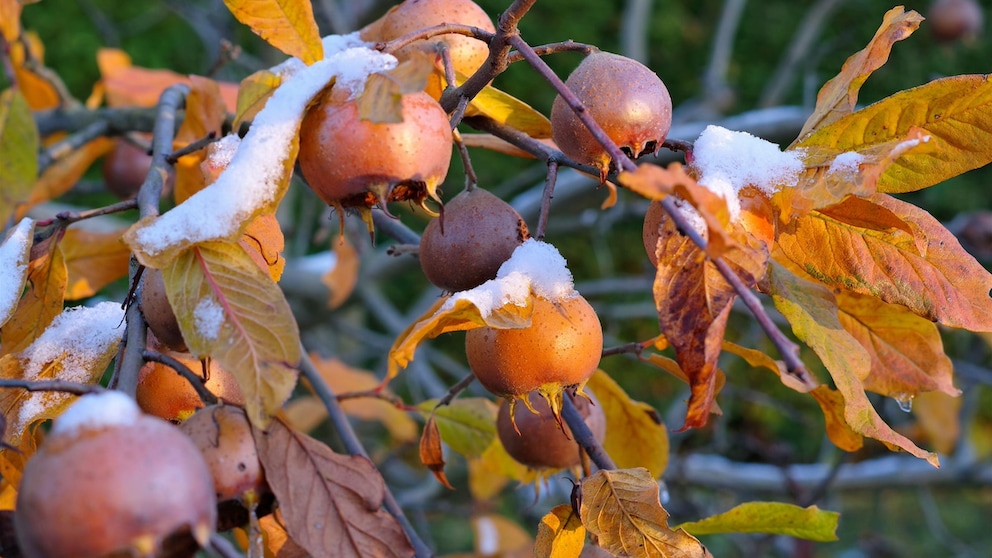
Medlars are only edible after the first frost has passed over them. Before that, the orange-brown fruits are hard and bitter in taste. The cold stimulus makes them soft, milder, and more aromatic. Only then do they reveal the typical, almost applesauce-like consistency for which they are appreciated.

These Fruits and Vegetables Should Not Be Placed in the Vegetable Drawer

How to grow sugar loaf lettuce properly in autumn and winter
Rose Hips
Rose hips become noticeably softer and milder after the first frost. Cold changes the tissue structure enough that the pulp is easier to process and the flavor appears rounder. Those who want to harvest early can still use rose hips before the frost.
Sloes
Sloes are among the fruits that only become truly edible through frost. Before the frost, they contain many tannins responsible for an astringent, very bitter taste. The cold triggers biochemical reactions that break down some of these tannins. The fruits become milder, softer, and show a smoother note. They are then well-suited for jam, liqueur, or jelly.