


September 16, 2025, 6:01 am | Read time: 4 minutes
The plum season extends from late summer into fall. In front of free-standing homes, you see baskets full of plums and honesty boxes, and plum jam is the number one gift at parties. But there are other ways to process plums. myHOMEBOOK editor Franka Kruse-Gering reveals what she makes from her plums besides jam and preserves.
Why Not Jam or Preserves?
Plums are not my favorite fruit, so I try to give most of them away. Since fresh plums don’t keep for long, you have to preserve them somehow. Jam and preserves are common, and I lack the finesse, so I process my plums a bit differently.
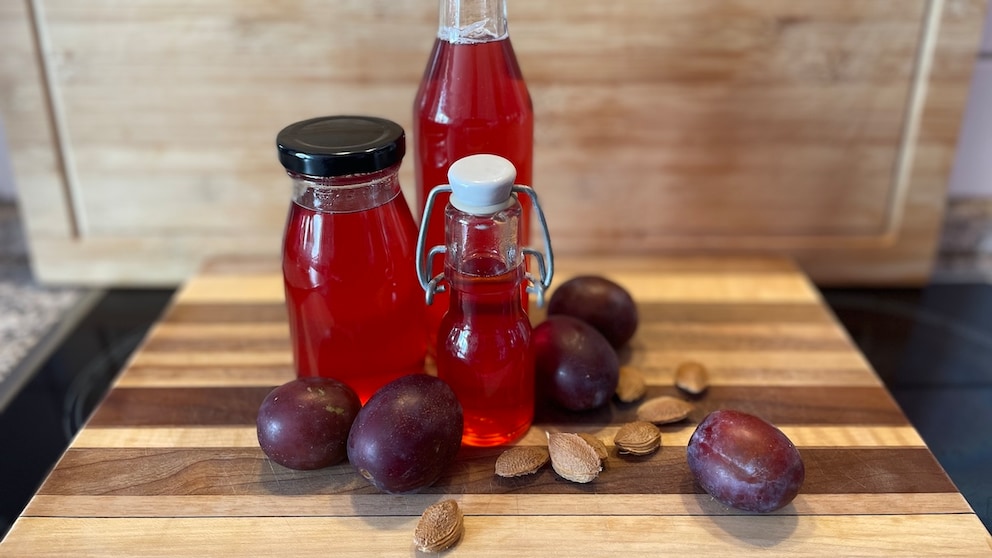
Processing Plums into Syrup
Raspberry syrup or woodruff is well-known, but plum syrup? It tastes as interesting as it sounds and can be used in many ways. Whether as an addition to sparkling wine or mineral water or with ice cream and waffles, plum syrup is almost always a hit.
Here’s what you need for about 1.5 liters of syrup:
- 1.5 kg ripe plums (pitted)
- 500 ml water
- 500–600 g sugar (depending on the sweetness of the plums)
- Juice of one lemon
- Optional: 1 vanilla bean (split)
- Optional: 1 cinnamon stick
- Bottles for filling
How to prepare the syrup:
- Roughly chop the washed and pitted plums.
- Cook the plums together with the vanilla bean and cinnamon stick for about half an hour until soft.
- After cooking, strain everything through a fine sieve or cloth. Do not press, as this could make the syrup cloudy.
- Then boil the liquid together with the lemon juice and sugar. Let it simmer lightly for about 15 minutes until the liquid thickens slightly.
- Finally, fill the hot syrup into sterile bottles.
Stored cool and dark, the plum syrup is good for up to a year. Once opened, it should be kept in the refrigerator and used within a few weeks.
Also interesting: Plum or Damson? Here’s the Difference

3 Ways to Process Quinces in the Fall

Plum or Damson? Here’s the Difference
Plum-Chili Salsa
Whether during a cozy movie night with nachos or as a spread: Plum salsa is really something different and is always well-received. The spiciness is a matter of taste.
Here’s what you need for four 200-milliliter jars:
- 800 g plums (pitted, roughly chopped)
- 1 red onion (finely chopped)
- 2 small red chili peppers (seeded, finely chopped – more or less depending on spiciness)
- 120 ml apple cider vinegar
- 100 g brown sugar
- 1 tsp grated fresh ginger
- 1 tsp salt
- Optional: spices like cumin, paprika, curry
How to make the salsa:
- Put all ingredients in a large pot and bring to a boil.
- Let everything simmer for about 30 to 40 minutes until a thick mixture forms. If it’s too thick, you can add a little water.
- The salsa can be pureed according to taste.
- The salsa should be filled hot into sterile jars.
Unopened, the plum-chili salsa is good for about six months.
Tip: If the salsa is too spicy, the heat can be reduced by adding a chopped apple. If it’s too sour, you can add water and a bit of sugar.
Festive Plum Liqueur
A little sip during a social gathering is certainly enjoyable. Homemade plum liqueur not only looks appetizing but also tastes wonderfully warm and a bit festive. With a pretty label, it makes a fantastic small gift. And the best part is: It requires hardly any effort.
Here’s what you need for about 1 liter of liqueur:
- 500 g ripe plums (pitted, quartered)
- 250 g brown rock sugar
- 1 vanilla bean (split)
- 1 cinnamon stick
- 700 ml vodka or double grain (at least 38% alcohol by volume)
- Large screw-top jar
- Glass bottles for filling
How to easily process plums into liqueur:
- All ingredients must be placed in a large, sterile, and sealable jar.
- The filled jar must now steep in a dark place for six to eight weeks.
- Occasionally, the jar should be gently shaken.
- After the steeping period, the sugar should be completely dissolved.
- The liqueur only needs to be filtered through a sieve or cloth and can then be filled directly into sterile glass bottles.