


December 30, 2025, 3:39 pm | Read time: 4 minutes
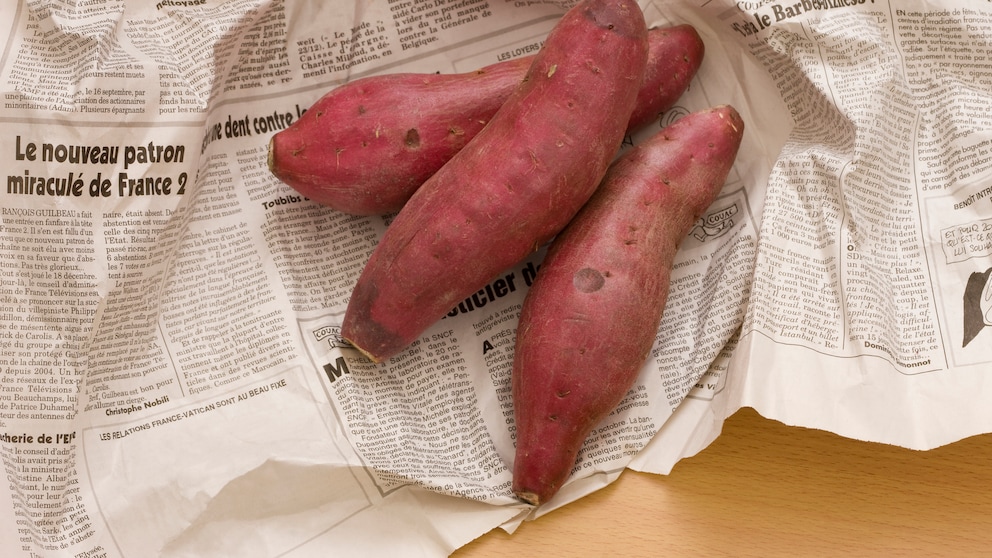
Many remember it from the past: wrapping fruits and vegetables in newspaper, loosely wrapping lettuce to “keep it fresh.” This trick was long considered a proven household hack—especially in the basement or pantry. But is it still advisable today? The short answer: No, better not. And there are several reasons for this.
Overview
Why Newspaper Is Problematic
Newspaper is not a food-safe packaging material. It is made from recycled paper and contains residues from printing inks and processing. These include mineral oil components that can transfer to food through direct contact. “Primarily relevant are Mineral Oil Saturated Hydrocarbons (MOSH) and Mineral Oil Aromatic Hydrocarbons (MOAH),” says Gabriele Kaufmann from the Federal Center for Nutrition (BZfE).
“MOSH can accumulate in the body in some organs like the liver and spleen, as well as in fatty tissue. According to EFSA, the data on their health effects is still considered insufficient. MOAH, in addition to certain aromatic ring systems, also contains carbon, hydrogen, and sometimes sulfur. They can contain mutagenic and carcinogenic substances, and here too, EFSA’s assessment is not yet complete,” Kaufmann continues.
How Do Mineral Oil Components Get Onto Fruits and Vegetables?
“Vegetables are very water-rich, and even in the refrigerator, the air is humid. In this environment, MOSH and MOAH can quickly transfer to the food. Avoiding abrasion of the printer ink is hardly possible, and contact transfer via hands is also difficult to avoid,” explains Gabriele Kaufmann. Instead, it is advisable to use only materials designated for food storage, such as food-safe papers or boxes, for all foods.
These Alternatives Are Also Better Suited
- Clean dish towels or kitchen towels: ideal for lettuce, herbs, or carrots in the refrigerator. They absorb excess moisture without releasing harmful substances.
- Beeswax wraps: reusable, breathable, and perfect for chopped fruits or vegetables.
- Paper from the kitchen roll section: unprinted and significantly more hygienic than newspaper.
- Breathable boxes or nets: especially practical for the refrigerator or pantry.
Accelerating the Ripening Process of Fruits
A special case involves fruits like pears or avocados that should ripen faster. It is sometimes recommended to wrap them loosely in paper. Again, it’s better to use unprinted paper or a paper bag—not newspaper.
How to Keep Vegetables Fresh Longer
The key to the shelf life of vegetables is temperature, humidity, and air supply. Leafy greens like lettuce, spinach, or herbs do best in the refrigerator when stored slightly moist but not wet—for example, wrapped in a clean kitchen towel or in an airtight container with air holes. Root vegetables like carrots, beets, or radishes stay crisp longer if the greens are removed. Cabbage varieties, zucchini, or bell peppers should be stored without pressure points and washed just before preparation.

8 Foods That Don’t Belong in the Refrigerator
Common Mistakes When Storing Mushrooms
Which Fruits Belong in the Fridge–and Which Don’t?
Not all fruits benefit from cool temperatures. Berries, grapes, cherries, and cut fruits belong in the fridge, in a breathable box. Apples also last longer there—they should be stored separately from other fruits as they emit ripening gases. Bananas, pineapples, mangos, avocados, and citrus fruits, on the other hand, do better at room temperature. Cold can lead to loss of flavor, brown spots, or a rubbery texture. Rule of thumb: Exotic fruits are better left out, while local varieties often do better in the fridge.
How to Store Other Foods Properly
- Bread & baked goods: Best stored at room temperature in a bread box or a clean cotton bag. Plastic and condensation promote mold, and the fridge makes bread go stale faster.
- Potatoes: Store cool, dark, and dry—ideally in a cellar or pantry. Not in the fridge, as starch turns into sugar there, affecting the taste.
- Onions & garlic: Also store dark, airy, and dry, for example, in nets or open baskets. Do not store with potatoes—they accelerate each other’s spoilage.
- Eggs: They last longest in the fridge. Important: store unwashed and preferably in the carton to prevent absorbing foreign odors.
- Milk & yogurt: Belong in the fridge (except unopened UHT products for storage, after opening always in the fridge), ideally in the back, colder section. After opening, seal well and use promptly.
- Cheese: Store differently depending on the type—hard cheese likes it cool and breathable, soft cheese better well-wrapped. Cheese paper from the vendor or suitable wax wraps are ideal.
- Cooking oils: Store dark and cool, but not necessarily in the fridge, as they can become cloudy there. Particularly sensitive are linseed, pumpkin seed, and walnut oil—use them promptly after opening.