


August 31, 2025, 3:48 am | Read time: 4 minutes
Properly storing food is often not so simple. Many people wonder whether storing cooking oils at room temperature is sufficient or if the liquid fat is better kept in the refrigerator. That’s why myHOMEBOOK reached out directly to the Federal Center for Nutrition (BZfE) for this article.
Two Types of Oils
Basically, there are two types of oils: virgin and refined oils. This distinction is independent of the processed oil-bearing fruits or seeds. It refers to the method of processing.
Virgin Oils
These oils are not heavily processed, usually only cold-pressed. Therefore, virgin oils have a distinctive aroma and a special color. They also contain particularly high levels of valuable unsaturated fatty acids, vitamins, and secondary plant compounds. While the former are essential for us, the latter are considered beneficial for health.
Refined Oils
Refined oils are processed industrially in a complex procedure. After pressing, the oils are heated, cleaned, degummed, neutralized, bleached, and freed from unwanted aromas. As a result, oils processed in this way are odorless, tasteless, and light in color.
Also interesting: 8 Foods That Don’t Belong in the Refrigerator
Uses for the Oils
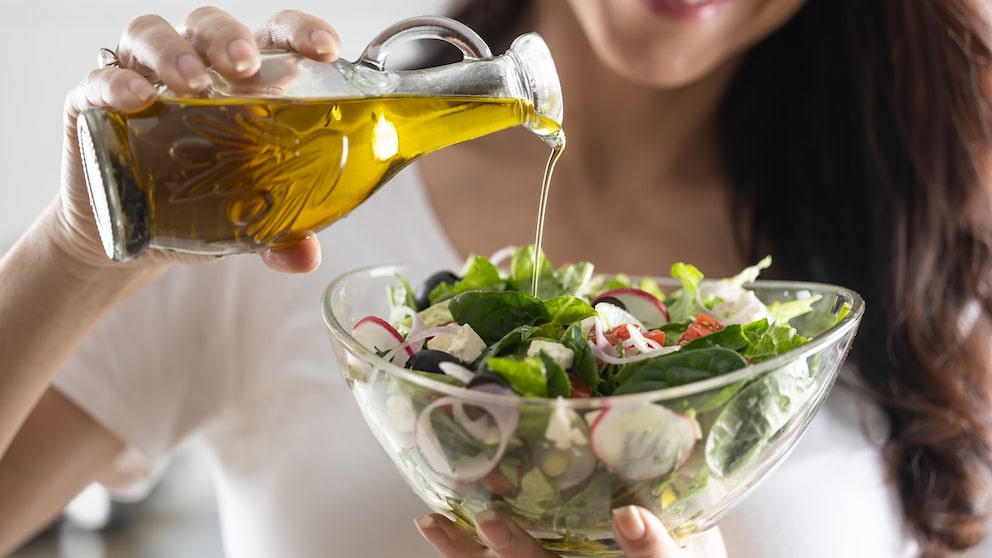
“Virgin oils are best suited for cold dishes due to their valuable ingredients, while refined oils are also suitable for heating when cooking and frying,” says Dr. Birgit Jähnig, nutrition scientist at the BZfE. Refined oils can certainly be used for salads or other cold dishes. They just don’t have a distinctive aroma.
To enhance the flavor of your salad, you can use virgin olive oil, rapeseed oil, pumpkin seed oil, walnut oil, or other nutty oils. Virgin oils also add a special flavor when seasoning, such as after steaming or poaching vegetables or fish. In Mediterranean cuisine, cold-pressed olive oils are particularly popular as flavor carriers.

Which Oil Is Suitable for Which Purpose

How to Keep Cut Herbs Fresh Longer
Shelf Life & Storage of Cooking Oil
The different processing of oils affects their shelf life and storage. For example, virgin olive oils are often sold in dark glass bottles. “Virgin oils are particularly sensitive to light, heat, and air oxygen. Therefore, such oils should be stored in the refrigerator and used quickly,” recommends Dr. Birgit Jähnig.
Some oils change their consistency when stored cool. “Olive oil, in particular, solidifies in the refrigerator and can become firm. At room temperature, the oil returns to its liquid state. However, this does not fundamentally affect the quality,” explains the nutrition scientist from BZfE.
Refined oils are longer-lasting even without refrigeration. “These cooking oils are usually sold in transparent plastic bottles. They can still be stored in a dark pantry,” advises Dr. Birgit Jähnig. “This protects the contained fatty acids.”
In terms of shelf life, virgin and refined oils differ significantly. Cold-pressed oils should be used quickly after opening. As a rule of thumb, within two or three months. Industrially processed oils can be used for a good half year without concern.
Smell and Taste Test
“Especially with virgin oils, it’s worth checking the best-before date,” explains the nutrition scientist and adds, “It should be as far in the future as possible. Basically, oils can still be used for cooking after this date. However, it’s important to conduct a smell and taste test before use. Oil that smells pungent and tastes bitter must be disposed of immediately, as harmful substances have developed in it.”
This also applies to refined oils. If the otherwise odorless rapeseed oil suddenly smells strange, the contents should be properly disposed of. Inedible cooking oil residues, along with the bottle, belong in the trash and not in the kitchen sink or toilet. In many cities and communities, regional waste disposal services also offer special collection points for old cooking oil. It’s worth checking the website or calling the responsible waste authority.