


October 28, 2025, 4:49 am | Read time: 4 minutes
Not every corner of the garden is bathed in sunlight all day, but even shady areas, slightly hidden, can have their own charm. With the right plants, colors, and design ideas, dark corners in the garden can transform into atmospheric retreats or surprising eye-catchers.
Atmosphere Instead of Sun: Designing Dark Corners in the Garden
Dark corners often form on the north sides of houses, under trees, or behind walls. Grass barely grows here, and many plants struggle to thrive. But this can be an advantage: Instead of fighting the shade, it’s worth embracing it—with structures, light accents, and plants that love partial shade or shade. This creates a calm, almost mysterious atmosphere, perfect for small relaxation spots. These places are ideal for hot days when you want to retreat outside with a book and a cool drink.
Plants That Love Shade
Shade-loving plants with decorative foliage are ideal for dark corners. They bring structure and color, even without a display of flowers:
- Hostas: With their large, often patterned leaves, they make impressive accents.
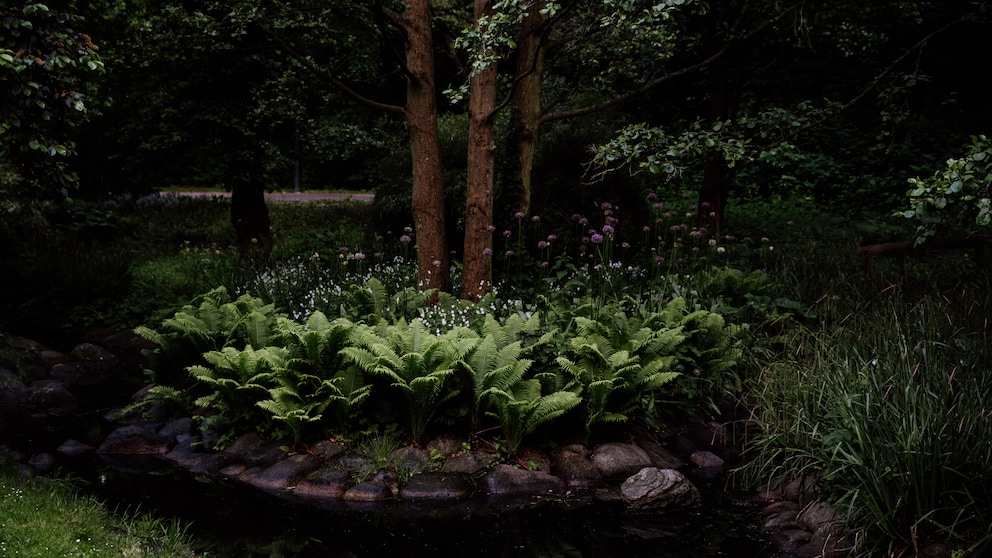
- Ferns: Create a natural, almost forest-like look.
- Coral Bells (Heuchera): Add color to the darkness with their reddish and bronze leaves.
- Barrenwort, Sweet Woodruff, and Periwinkle: Dense ground covers that fill bare spots and create a green, natural carpet of leaves.
- Hydrangeas: Especially varieties like mophead or ball hydrangeas love partial shade and bring bright blooms into the darkness.
Materials and Colors with Brightening Effects
In shady areas, light, natural materials can work wonders: Gravel, light stones, wood, and cream-colored pots reflect light and make the area appear friendlier. Mirrors or small water bowls add movement and enhance the light effect. White or pastel-colored flowers—such as astilbes or anemones—shine beautifully against a dark background.
Bringing Light into the Darkness
Strategic use of garden lighting can highlight a dark corner in the evening. Solar lights, small spot lights, or string lights create a gentle, warm atmosphere. It’s especially atmospheric when light filters through plant leaves or highlights the contours of a tree.
Also interesting: Do You Know What a “Ha-Ha” in the Garden Is?

9 Perennials for Shady Spots

The Best Plants for Natural Shade in the Garden
Creating Structure and Depth in Dark Garden Corners
To make a dark garden corner lively, playing with different heights is crucial. Instead of placing all plants on one level, a tiered planting concept is worthwhile: Tall shrubs or shade-tolerant trees like yew, viburnum, or rhododendron form the green backdrop. In front, hostas, astilbes, or coral bells harmonize well, while ground covers like sweet woodruff or periwinkle fill the lower area and keep weeds at bay.
This creates a varied, natural picture with depth—almost like a small forest edge in your own garden. Playing with different leaf structures—such as large, smooth hosta leaves next to delicate fern fronds—provides exciting contrasts, even without many flowers.
Conclusion: Creating Cozy Retreats
With a narrow bench, a cushion, or a hammock, a dark corner can quickly become a cozy spot for relaxation. Blankets, lanterns, and a few pots with ferns or hostas complete the picture, turning the shade into a new favorite place in the garden.

Dark Corners in the Garden as a Refuge
“Dark corners in the garden are not only exciting in design—they are also ecologically valuable. Especially in the fall and winter months, they offer important protection for animals and insects. A pile of leaves under shrubs quickly becomes a cozy winter home for hedgehogs, while dead plant stems and pieces of wood provide shelter for beetles, spiders, or butterfly pupae. Instead of tidying up every shady corner, it’s worth letting a piece of nature take its course. At least in fall and winter, when the garden rests. This not only pleases the animals but also brings new life to the garden in spring.”