


March 6, 2026, 10:55 am | Read time: 4 minutes
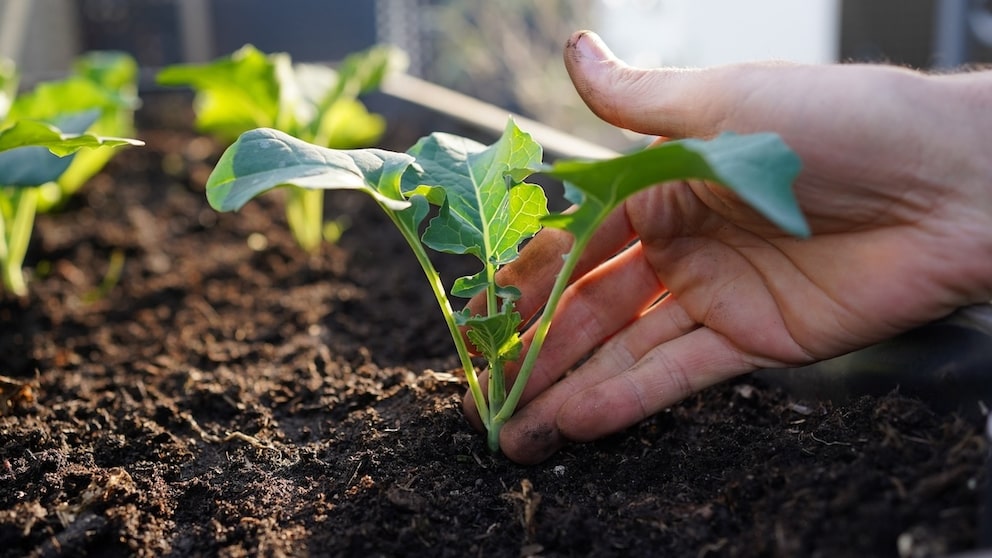
Kohlrabi is a vegetable for those who want to see quick results. From the right germination temperature to the correct sowing depth and hardening off, myHOMEBOOK author and gardening expert Katharina Petzholdt explains what you need to know to grow strong young plants.
Kohlrabi is not only the fastest-growing cabbage vegetable but also the easiest to cultivate. Because it is easy to grow, it is suitable for gardening beginners. Kohlrabi can be started indoors or sown directly. Those who sow directly in the garden have less work and spare the plants the stress of moving. However, starting indoors has its advantages: Kohlrabi started indoors enters the garden with a growth advantage and can be harvested earlier. Additionally, young plants indoors are protected from slugs, and conditions such as temperature and water supply can be better controlled.
The Right Time for Sowing
Kohlrabi can be grown from late winter to fall, depending on the variety. Depending on the variety and season, it takes 12 to 20 weeks from sowing to harvest. Sowing times vary greatly: Some varieties can be started as early as January, while others not until July. Checking the seed packet helps find the right variety for your needs. Direct sowing is usually possible from April. Kohlrabi started indoors takes about six weeks from sowing to planting.
The Right Temperature for Successful Germination
At a temperature of 16 to 20 degrees Celsius, it takes about 6 to 10 days for the seedlings to appear.
Two Cultivation Methods
There are two simple ways to cultivate: Either start the seeds together in a tray and separate the plants later, or grow them individually in small pots from the beginning.
- Shared Sowing Tray: The seeds are sown together in a tray filled with seed-starting soil. When the first true leaves appear after the cotyledons, the plants are carefully transplanted into individual pots, where they continue to grow in more nutrient-rich soil.
- Sowing in Individual Pots: To avoid transplanting, you can sow directly into individual pots or multi-pot trays. These should be about four to five centimeters in diameter. Since not all seeds germinate, often two seeds are sown per pot. If both germinate, the weaker plant is cut off just above the soil.
Preparation and Sowing
Whether in individual pots or sowing trays: After filling with seed-starting soil, the substrate is lightly pressed down, possibly refilled, and then watered. This prevents the small seeds from being washed into deeper layers when watering after sowing. Use a dibber, pencil, or similar object to make holes 0.5 to 1 cm deep in the soil. Then sow, close the seed furrow, and water gently with a watering can or spray bottle.
Starting Onions from Seeds or Direct Sowing?
How to Successfully and Reliably Grow Salad Greens
Water and Light
During the germination phase, the soil must remain consistently moist but not overly wet. A clear plastic cover or indoor greenhouse makes watering easier by preventing the soil from drying out quickly. If the cover is removed briefly once a day for ventilation, mold has little chance to develop.
When the young plants break through the soil, they should be moved to a slightly cooler place. However, they should not be kept at temperatures below 12 degrees Celsius for long in the young plant stage, as this could prevent bulb formation. A bright location is crucial for healthy growth. If the plants receive too little light, they develop thin, long, weak stems instead of strong plants.
Care Until Planting Out
Until they are moved outside, the young plants need plenty of water and light. About a week before moving them outdoors, the plants are hardened off by placing them outside in a sheltered spot from the sun and wind for a few hours during the day. Then, the time spent outside is gradually increased, and the plants are slowly acclimated to sun, wind, and temperature fluctuations.