


March 17, 2026, 5:33 am | Read time: 4 minutes
Sowing onions instead of planting sets is a bit more labor-intensive, but with the right preparation, it works smoothly. myHOMEBOOK author and gardening expert Katharina Petzholdt explains how to successfully grow them indoors and what to consider for direct sowing.
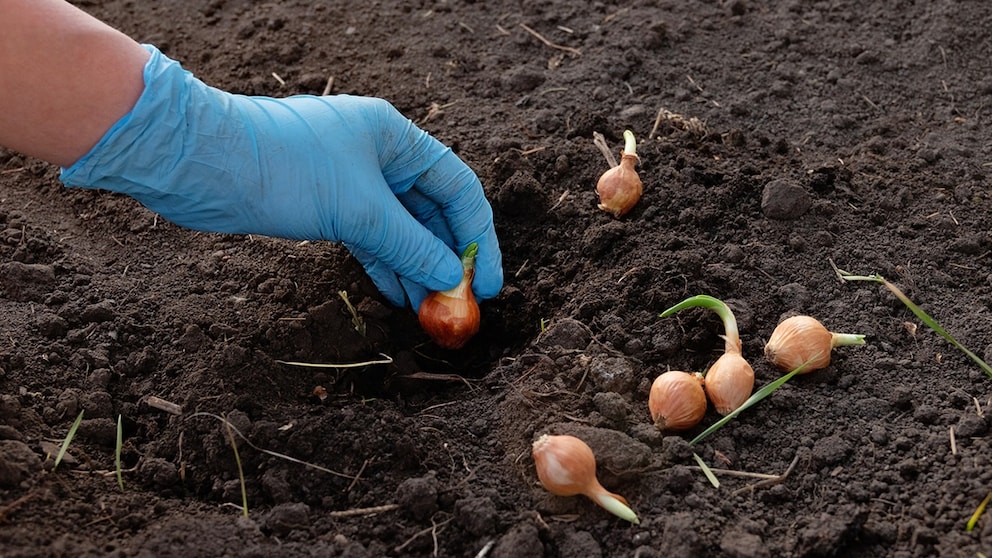
Small onions in, large onions out. That’s how onion cultivation works in most hobby gardens. The so-called onion sets are a shortcut in the garden that allows for a quick harvest. However, onions can also be grown from seeds, either started indoors or sown directly into the garden bed.
Sowing Onions Instead of Planting Sets: Pros and Cons
Those who sow onions have a significantly larger selection of varieties. Many storage onions and varieties with special colors or shapes are more commonly found as seeds rather than sets. Another advantage is the generally better storability of onions grown from seeds. Seed is also an attractive option for the budget, especially if more than a few rows of onions are planned. The downside of sowing is mainly that it takes a few weeks longer until harvest.
The Right Time for Sowing
It takes about four months from sowing to harvest. The starting signal for indoor cultivation is in February or March. Direct sowing starts a bit later, usually between mid-March and April, depending on the variety and weather conditions.
The Right Temperature for Germination
Onions germinate at 41 degrees Fahrenheit. However, germination works best at temperatures between 50 and 68 degrees Fahrenheit. Depending on the temperature, it takes two to four weeks for the first green to emerge from the soil.
Indoor Cultivation in Pots or Seed Trays
Onions can be started indoors in two different ways.
- Sowing in individual pots: Seedling trays, where many small pots are connected, are well-suited for onion cultivation. Pot sizes with a diameter of at least 1.5 inches have proven effective. Either one seed is sown per pot or several.
- Shared seed tray: Some gardeners prefer sowing in a seed tray, where the seeds are sown together with some spacing.
Whether in individual pots or a seed tray: Fill with seed-starting soil, press lightly, and if it settles, add a bit more soil. Then moisten to ensure the soil settles and the fine seeds are not washed away when watering later.
Sow at a depth of one to two centimeters. In small pots, either a single seed or several—about three to five—can be sown. To avoid the hassle of pre-drilling individual holes in a seed tray, simply spread the seeds on a first, shallow layer of soil and then fill the container to the desired sowing depth.
How to Grow Kohlrabi Indoors
How to Successfully and Reliably Grow Salad Greens
Care Until Planting
During the germination phase, the soil must always remain sufficiently moist, but waterlogging should be avoided. Covering with clear plastic wrap or using a mini greenhouse ensures the soil doesn’t dry out too quickly. Ventilate once a day to prevent mold formation.
When the young plants break through the soil, they should continue to grow in a rather cool but very bright place. If a cover was used, it can be removed now. Until planting out, the young plants still need sufficient water. About a week before moving outdoors, the young plants should be hardened off, meaning gradually acclimated to outdoor conditions.
Direct Sowing in the Garden Bed
For direct sowing outdoors, it’s best to loosen the soil a few weeks before sowing and work in some well-rotted compost. At sowing time, the soil should be fine-crumbled and free of weeds. The ideal distance between rows is about 8 to 12 inches, and the distance within the row depends on the expected final size of the onions and should be between 2 and 4 inches.
The easiest way to sow in rows is to draw a two-centimeter deep furrow in the moist soil, place the seeds at regular intervals, close the furrow well, and then water gently again.