


February 10, 2024, 5:15 am | Read time: 4 minutes
When it comes to insect-friendly gardening, nectar and pollen are often mentioned. Here on myHOMEBOOK, we explain what these two substances are all about, how they relate to pollination, and why cucumbers don’t need legs.
Cucumbers don’t have legs. Therefore, like all other plants, they can’t simply set off to find a suitable partner for reproduction. To succeed nonetheless, they use different strategies. Some plants rely on the wind for pollination. However, more often, plants enlist insects such as wild and honey bees, butterflies, flies, wasps, and beetles as pollination service providers.
How Does Pollination Work?
For plants to produce fruits and seeds, which ultimately serve their reproduction, they must be pollinated. Pollination is the process where pollen, containing male genetic material, is transferred to the female plant organ, known as the stigma. This transfer is mainly carried out by insects and the wind.
What Is Pollen?
The term pollen comes from Latin and means “dust meal.” And that’s how pollen looks. The tiny grains, also called flower dust, are secreted by the stamens of flowering plants.
Pollen is not only necessary for plant pollination but also serves as food for many insects. Bees, for example, primarily use the protein-rich pollen as food for their larvae. But pollen is also on the menu for wasps and some beetle and fly species.
Wind Pollination
Cereals and other grasses, as well as conifers and many deciduous trees like birches, hazels, beeches, and poplars, let their pollen be carried away by the wind. The pollen lands only by chance on the stigma of a suitable plant. Nevertheless, this type of pollination works quite reliably. This is mainly because wind-pollinated plants–to the dismay of all hay fever sufferers–produce millions of pollen grains per flower.
“Wind-pollinated plants have one thing in common: They all produce no nectar, only the pollen necessary for pollination,” explains Cornelis Hemmer from the “Foundation for People and the Environment” and the initiative “Deutschland summt!” But water can also take over pollination: In many aquatic plants, pollen is transferred from flower to flower via water.
Pollination by Animals
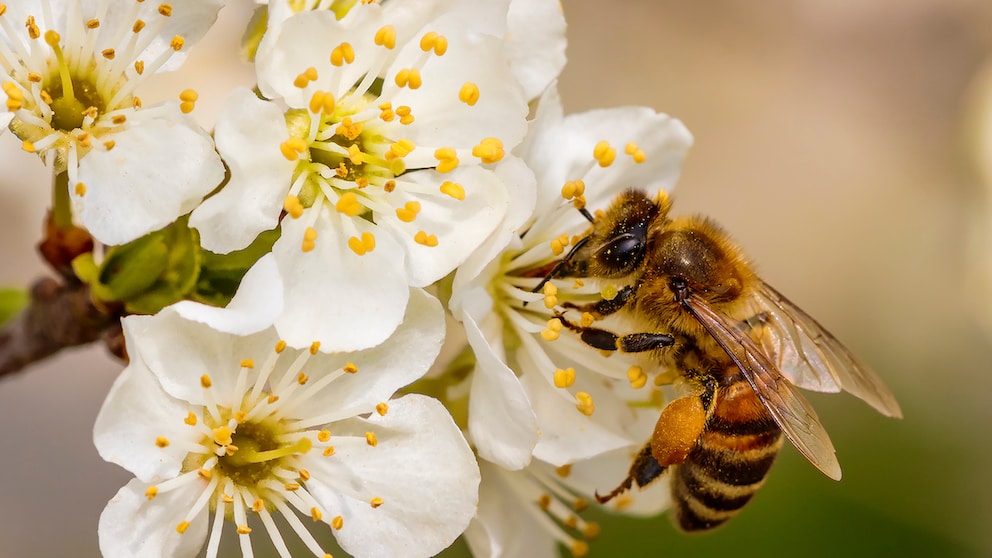
Pollination works much more purposefully in plants that enlist insects for their reproduction. They attract insects with their flower colors and various scents. While collecting the nutritious nectar, the animals brush against the stamens in the plant’s flower, where pollen sticks to them. With this unintended load, they fly to the next flower, where the pollen sticks to the stigma. And just like that, the flower is pollinated!
Note: While insects mainly handle pollination in Europe, in other parts of the world, birds, bats, or flying squirrels also act as pollen carriers.
What Is Nectar?
Nectar is a watery liquid produced in specialized glands called nectaries. “It consists, among other things, of various sugars like glucose, fructose, and sucrose, but also contains minerals and insect-attracting fragrances,” explains Cornelis Hemmer. While pollen is primarily intended for larvae, nectar serves as food for the bees themselves. Butterflies, wasps, various flies, and beetles also feed on the sweet juice.
Also interesting: 8 Tips to Make Wild Bees Feel at Home in Your Garden
How to Attract Bumblebees to Your Garden or Balcony
These Plants Are the Best “Bee Magnets,” According to Scientists
Pollen Value and Nectar Value
If you want to know exactly how useful your garden plants are for insects, you can check the internet for the pollen and nectar values of individual plants. A commonly used scale for these values ranges from 0 to 4. A plant with a nectar value of 0 offers no nectar or only insignificant amounts. If a plant’s nectar value is 4, it offers a lot of nectar. The pollen value works the same way.
Back to the cucumber mentioned above: Its pollen value is 2, and its nectar value is 3. A feast for insects! Even more food is provided by fruit trees like apple, sweet and sour cherries, plums, peaches, and apricots, as well as plants like willow, white clover, silver thistle, rapeseed, Jacob’s ladder, sainfoin, or yellow sweet clover. They all have both their nectar and pollen values at 4.
A low pollen and nectar value doesn’t necessarily mean that the plants are useless for insects. Chamomile, for example, has both its nectar and pollen values at only 1. Nevertheless, it is ecologically valuable, as 73 wild bee species are attracted to it, and it serves as a caterpillar food plant for five butterfly species.
Insect-Friendly Gardening
If you want to create an insect-friendly garden, you shouldn’t just focus on pollen and nectar values. Other aspects should also be considered: Those who choose native plants and plant many different species that bloom throughout the year have already achieved a lot in terms of “natural gardening.”
It’s even better to prefer simple rather than double flowers, create a structured environment, and avoid using pesticides. What else is important in an insect-friendly garden, Cornelis Hemmer reveals in an interview with myHOMEBOOK editor-in-chief Felix Mildner.