


November 18, 2026, 2:33 pm | Read time: 4 minutes
A lemon tree brings a Mediterranean flair to the garden or balcony. However, while the plant thrives in warmth, it is sensitive to cold and frost. Therefore, some important points should be considered when overwintering. myHOMEBOOK explains how to properly overwinter a lemon tree.
Overview
- How much cold can a lemon tree tolerate?
- Properly overwintering a lemon tree
- Can you overwinter a lemon tree indoors?
- Proper care for a lemon tree in winter quarters
- Why a lemon tree loses leaves during overwintering
- Overwintering a lemon tree with unripe fruits
- When can the lemon tree leave winter quarters?
How much cold can a lemon tree tolerate?
In general, a lemon tree prefers warmth, but cooler temperatures are acceptable to a certain extent—even though it is not frost-resistant. Frost is when the plant becomes uncomfortable. As soon as the first night frosts occur, the lemon tree should be brought in for overwintering. To make this possible, the plant should be cultivated in a pot.
Properly overwintering a lemon tree
When it comes to winter quarters, there is a peculiarity with lemon trees: It must be either bright and warm or dark and cool. The latter is generally more favorable for the tree—but it should not be pitch dark. Therefore, a cool greenhouse is suitable as winter quarters for the lemon tree—it’s important, however, that the windows are shaded.
Temperatures between five and ten degrees Celsius are ideal if you choose a cool and dark winter quarters. A simple rule of thumb is: The cooler the location, the darker it should be. It is also advisable to place the pot on a Styrofoam board or similar to prevent the root ball from cooling down.
Also interesting: Overwintering an olive tree—how it survives the cold season
Can you overwinter a lemon tree indoors?
In principle, it is possible to overwinter a lemon tree indoors—if the temperatures are right. Values between ten and 15 degrees Celsius should not be exceeded. However, it is usually warmer in a home. If you do have a suitable spot, it is important that this place is also bright enough. Normal daylight in winter is usually not sufficient—a plant lamp can help.
Proper care for a lemon tree in winter quarters
Even in winter quarters, a lemon tree needs proper care. How exactly this should look depends on how you overwinter the plant—bright and warm or cold and dark.
If you overwinter the lemon tree in a bright and warm place, you must also water it regularly and even fertilize it if necessary. In a dark and cool location, the tree requires only a little water and no fertilization.
Before placing the lemon tree in its winter quarters, it should be checked for pests and diseases. Scale insects, snails, or spider mites are particularly comfortable and must be removed in time to prevent them from causing damage in the winter quarters.
Why a lemon tree loses leaves during overwintering
Occasionally, a lemon tree may suddenly lose its leaves in its winter quarters. This is often due to an incorrect location or improper care.
Experts from Ökotest write on their website that the lemon tree is actually in winter dormancy. However, if it receives too much light on sunny days, it will begin photosynthesis. This increases the water demand. And that’s exactly where the problem lies: The roots remain in winter dormancy and cannot meet the suddenly increased water demand. Experts recommend not exposing the lemon tree to high temperature fluctuations.

Overwintering Olive Trees: How They Survive the Cold Season

8 Popular Herbs to Overwinter Properly–How They Survive the Cold Season
Overwintering a lemon tree with unripe fruits
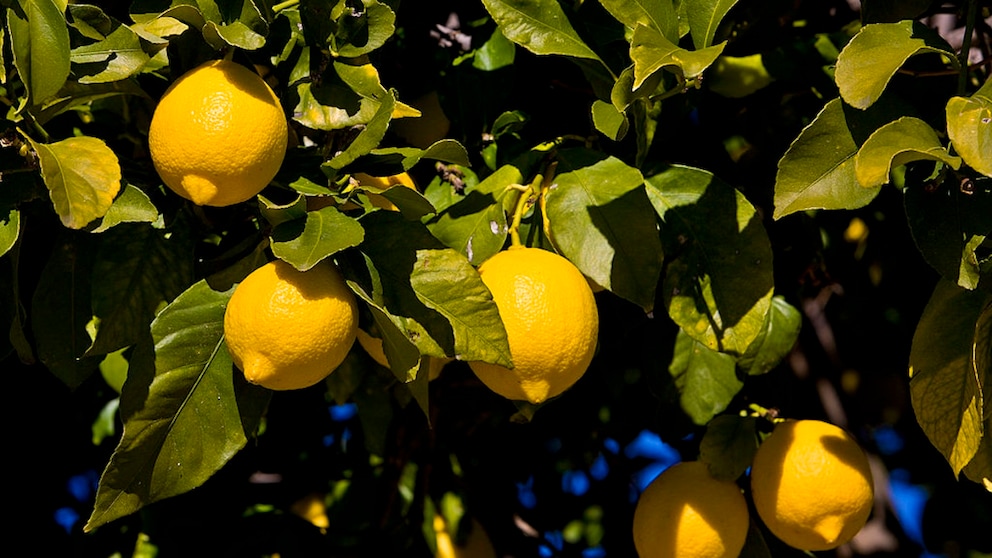
It is not uncommon for a lemon tree to still have some unripe, green fruits when it’s time for winter quarters. Hobby gardeners need not worry and do not have to forgo the lemons. Simply leave the green fruits on the tree, and they will continue to ripen in the coming spring.
When can the lemon tree leave winter quarters?
As soon as temperatures rise again, the lemon tree can be taken out of its winter quarters. However, one should not be too hasty and should proceed cautiously.
From the end of April, the lemon tree can be placed in a shady spot outdoors on warmer days. Not in direct sunlight, as the leaves could get sunburned. During the Ice Saints, the tree should be brought inside at night to avoid frost exposure. Otherwise, it can be protected with fleece during the still cooler nights.

myHOMEBOOK Tip
“Before bringing the lemon tree into winter quarters, it can be pruned once more. Young lemon trees, in particular, tend to become bare in the lower area. They then grow more narrowly upwards. To prevent this, a fall pruning is worthwhile. Older plants can also tolerate pruning to promote fruit growth.”