


November 2, 2026, 5:41 pm | Read time: 3 minutes
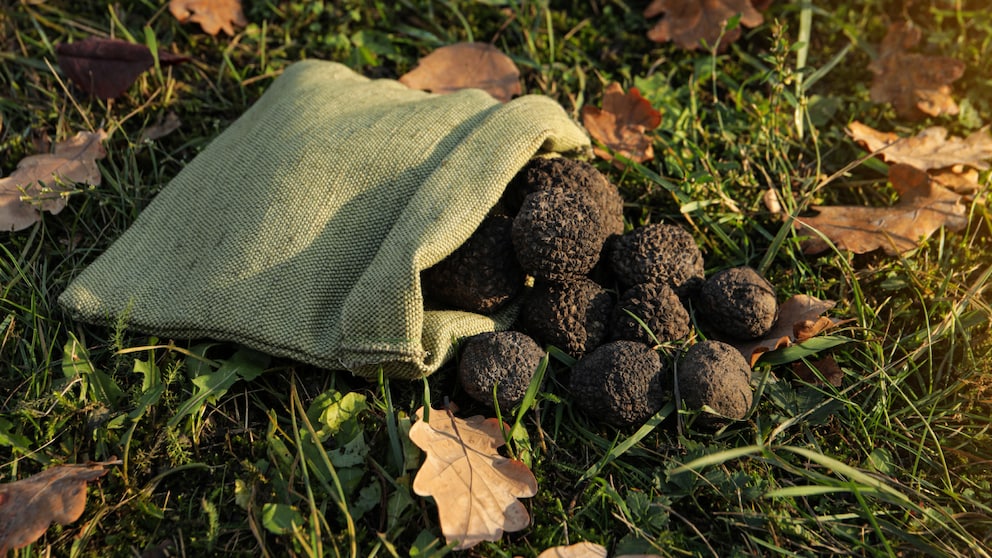
Truffles are considered a special delicacy and are often associated with countries like France or Italy. However, various types also occur in Germany. If you want to search for these underground-growing fungi yourself, you don’t necessarily need a trained truffle dog. However, there is a crucial limitation to the search. Gerhard Schuster from the German Society for Mycology (DGfM) explained to myHOMEBOOK where the chances of finding them are particularly good and what truffle hunters must absolutely keep in mind.
Can You Search for Truffles Without a Dog?
Truffle dogs are known for the search, but according to Schuster, they are not absolutely necessary. Even amateurs can embark on the search. Those who are successful may encounter different types of truffles in Germany. “More than ten species of the Tuber genus have been documented in Germany,” Schuster explains. However, only summer or Burgundy truffles and winter truffles have culinary value.
The fact that numerous mushroom species are recorded in Germany is also shown by the portal “Pilze Deutschlands” managed by the DGfM. There, reports of finds are collected and distribution maps are created based on nationwide mushroom mapping.
Where Can You Find Truffles in Germany?
Simply searching anywhere in the forest is unlikely to be successful. According to Schuster, the region, the soil, and the trees growing there are crucial.
“Southern Lower Saxony and Northern Hesse are traditionally good truffle regions,” he explains. Locations with shell limestone in the soil are particularly interesting. Certain tree species can also indicate suitable conditions: “Oaks, hornbeams, and hazelnuts promise success in the search for truffles.”
Also interesting: Harvesting truffles from your own garden–here’s how
These Plants Reveal Where Edible Mushrooms Grow
Can You Sell Wild Mushrooms You Gather Yourself?
Is It Legal to Collect Truffles in Germany?
This is where the catch lies for hobby seekers. Discovering a wild-growing truffle does not mean you can dig it up and take it home.
Schuster points to the legal regulations: “All species of the Tuber genus have been placed under special protection by the legislator in the Federal Species Protection Ordinance (BArtSchV).” Therefore, they may not be “removed, collected, or have their habitat destroyed or manipulated.”
For some other protected edible mushrooms, there is an explicit exception. For example, porcini mushrooms, chanterelles, birch boletes, and red-capped scaber stalks, as well as morels, may be taken from nature in small quantities for personal use. The DGfM’s positive list also distinguishes between particularly protected mushrooms, for which an exception for small quantities for personal use applies, and protected species without such an exception.
Where Is Truffle Collecting Allowed?
Interested parties do not have to completely forgo truffle collecting. It depends on where the fungi grow. Schuster points out one possibility: “There are now many private truffle plantations again. Collecting truffles is allowed there.”
Another possibility exists for scientific purposes. According to the expert, some members of the Hypogea research group have obtained special permits for the collection of truffles.