


March 26, 2026, 11:08 am | Read time: 3 minutes
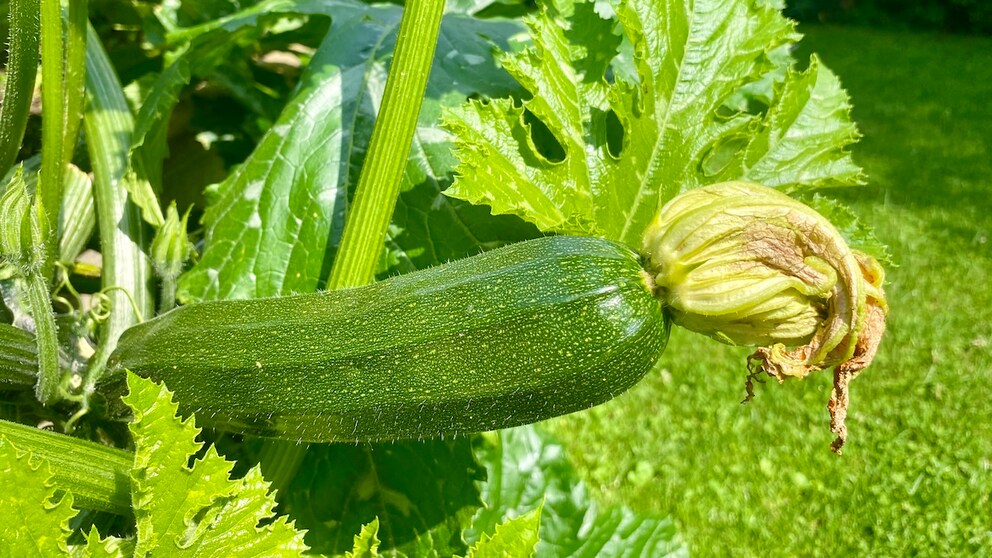
Zucchini is a rewarding plant in the vegetable garden. To ensure a bountiful harvest, the plants should be started indoors. myHOMEBOOK explains how to do it and what to watch out for.
If their needs are met, just two to three plants usually provide enough zucchini for a family of four. All the plants require is a sunny, warm, and sheltered spot along with loose, nutrient-rich soil. Zucchini can be started indoors to be transplanted outside as young plants by mid-May.
The Right Time for Sowing
Zucchini grows quickly. Often, only eight weeks pass between sowing and the first harvest. The plants are best transplanted when the seedlings have formed the first two true leaves after the cotyledons, and the next leaf is already visible. Waiting too long can result in overgrown seedlings that must continue growing in pots, even though the root space is limited. Such plants often struggle to establish themselves after moving outdoors. Starting the cultivation indoors from mid to late April ensures the seedlings reach the right developmental stage after the Ice Saints, when they can be moved outside.
The Right Temperature for Successful Germination
The ideal germination temperature for zucchini is consistently between 68 and 72 degrees Fahrenheit. In this warm range, the seeds develop particularly reliably and evenly. Under optimal conditions, the first seedlings usually appear after about a week.
Preparation and Sowing
Zucchini do not like to be transplanted. Therefore, it is advisable to sow them directly in individual pots, where they can remain from sowing to planting. A pot diameter of at least three inches provides the vigorous plants with enough space. Holes at the bottom of the pots ensure excess water can drain away.
First, fill the planting containers with seed-starting soil and press it down lightly. Then, use a dibber or pencil to make holes 0.8 to 1.2 inches deep in the soil. Place one seed per pot and cover it with soil. Water afterward.

Which Plants to Start Indoors in March
Starting Onions from Seeds or Direct Sowing?
Water and Light
Since the soil must not dry out, regular monitoring is recommended. To make the task easier, cover the pots with clear plastic wrap or place them in a mini greenhouse. This helps retain moisture longer. About once a day, the plastic or greenhouse lid should be removed briefly for ventilation.
Once the seedlings break through the soil, they should be moved to a cooler location. Ideally, temperatures should then be between 59 and 64 degrees Fahrenheit. At the same time, it is important for the plants to receive as much light as possible from now on. The cover, if present, is no longer needed.
Care Until Transplanting
Until they move outdoors, young zucchini plants need plenty of water. However, waterlogging must be avoided. Since the time in pots is relatively short, fertilization before transplanting is usually unnecessary.
At least a week before the seedlings are moved outside, they should be acclimated to outdoor conditions. To do this, place them in a shaded, sheltered spot for a few hours a day at mild temperatures. Gradually, the time spent outdoors can be extended, and the location should become increasingly sunny. When no more frosts are expected, they can be moved outside, well-prepared, by mid-May.