


October 7, 2026, 4:47 am | Read time: 4 minutes
Good acoustics in rooms are essential for well-being. Unfortunately, this often becomes apparent only when it affects your mood and conversations suddenly become tiring. In a home office, for example, when the room sounds echoey and your voice in a video call sounds tinny. Or in the living room, when it’s hard to understand each other while the TV is on. Such moments can tire the ears over time and rob your home of its tranquility.
Follow myHOMEBOOK on WhatsApp now
Architecture and Room Size Can Amplify Echo
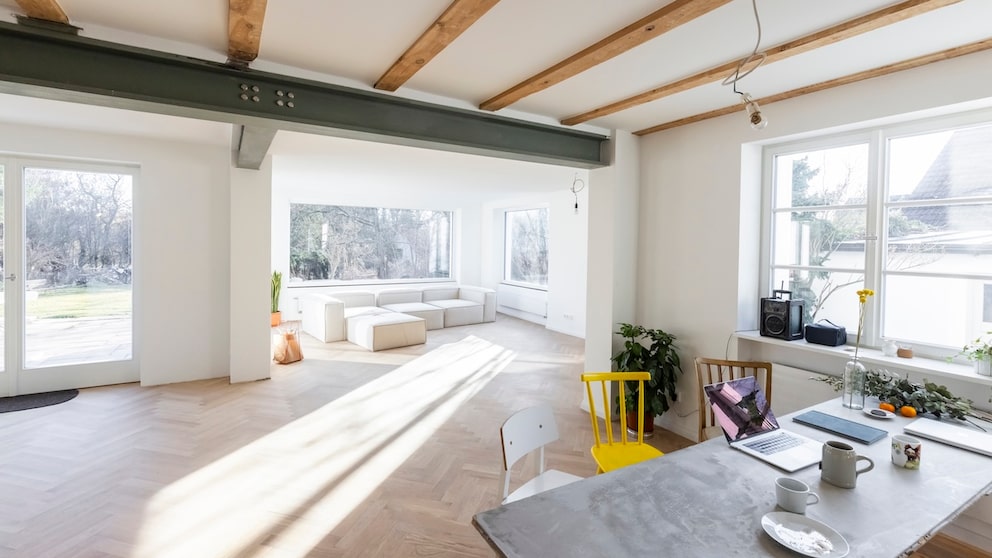
Even if it’s not immediately obvious, the architecture of a home can significantly impact the sound at home. Specifically, it’s the surfaces in every room: walls, floors, ceilings, and windows. But room size can also alter acoustics.
In small spaces like a bathroom or a narrow storage room, sound doesn’t have far to travel to the next wall. It comes back just as quickly, often in milliseconds. This is often perceived as loud or unpleasant, even if objectively no more echo is created.
In larger rooms like an open loft, a spacious kitchen-living room, or a living room with high ceilings, sound travels longer distances before hitting a surface. While more echo can occur, the sound spreads more broadly and thus feels calmer overall.
Also interesting: Can houses really be built with a 3D printer?
Impact of Floors on Room Acoustics
Floors also have a significant impact on room acoustics. Tiles, parquet, laminate, and stone floors strongly reflect sound and create unpleasant echo in the room. They also amplify footfall noise, which you hear when walking. To reduce noise in the rooms below, impact sound insulation is often installed under hard floors. For better acoustics in the room itself, soft surfaces like carpets are effective.
Sound-absorbing floors are a must in rooms with poor acoustics. Carpets and similar floor coverings are considered porous sound absorbers, according to a Fraunhofer study, as their open and air-permeable structure absorbs sound waves rather than reflecting them. Cork is similar, as its surface is also open-pored.
Hard Surfaces Reflect Sound
With walls, especially hard walls, echo is perceived almost as strongly as with hard floors. They reflect sound just as quickly and do not absorb it. With a concrete wall or a tiled surface, the sound absorption rate is practically zero. This often affects bathrooms, kitchens, and hallways with tiled walls, as well as living spaces with large glass surfaces, window fronts, or smoothly painted walls. Sound literally bounces off these surfaces instead of being absorbed, amplifying the reverberation already coming from the floor.
If you notice a similar situation at home, there’s no need to hang your head or start major renovations. With a few small tricks, you can make your home not only more comfortable but also noticeably improve the acoustics.

6 Common Mistakes When Setting Up the Dining Room

Why Modern Apartments Often Feel Uncomfortable Today
Tips for Quieter Living
Often, very simple solutions are enough to acoustically enhance your home. Floor-length curtains, for example, work wonders: They absorb sound effortlessly and instantly make the room cozier. Plants are also great helpers. They serve as natural sound absorbers, reduce noise, and bring life into the home. For book lovers, full bookshelves are ideal: The different book sizes break up sound and prevent harsh echoes. It’s even said that each book can contribute to a quieter home.
In a bedroom with wooden floors, open wardrobes and floor-length curtains can absorb sound. Upholstered furniture like box spring beds can also reduce noise. Similar to an open wardrobe, a coat rack in the hallway with hanging jackets or coats can help. Even a simple rug in the hallway, like sisal, can be effective. Of course, acoustic panels can also be used.
Also interesting: Why new buildings often look monotonous today
Small Furniture for Better Room Acoustics
In addition to the furniture already mentioned, there are a number of smaller pieces that can also help reduce echo in a room without having to completely redecorate. Upholstered stools, for example, which are now even specifically designed for room acoustics, can capture sound. They are barely larger than a regular piece of seating furniture and can be discreetly integrated into almost any decor. Open shelves filled with decorations or plants can scatter sound with their irregular surfaces instead of simply reflecting it, while also providing additional storage space.
Even wall decorations can play a small role, as bare walls reflect sound particularly strongly. Pictures with wooden frames help absorb sound better than those with glass frames. And if you want to do more, you can buy larger houseplants, which are known to break up sound with their leaves. Placing them intentionally in the corners of a room can even help reduce disruptive standing waves.