


May 11, 2026, 10:54 am | Read time: 5 minutes
Dandelions are often dismissed as pesky weeds in the garden because they spread quickly and have deep roots. However, there are effective methods to remove them. At the same time, the plant is far from useless: Every part of the dandelion is usable and can be creatively processed in the kitchen.
Overview
Stop the Spread of Dandelions
First, it’s advisable to cut off the flowers before they turn into seed heads. This interrupts further spreading, as the seeds cannot disperse at this stage. It’s important to regularly check and remove new flowers before they open. Ideally, cut the flowers as close to the stem as possible and dispose of them in the trash to prevent any developed seeds from spreading in the garden.
Digging Out Dandelions
Digging out is a gentle method to get rid of the yellow weed king. You should try to get the entire root, as even the smallest root piece can grow into a new plant next year. It’s best to use this method after rain, as the roots are easier to remove from the moist soil.
Remove or Dig Up the Lawn
If the lawn is completely covered with dandelions, often only a radical cure helps–digging up or removing the lawn. This involves removing 30 to 50 centimeters of the lawn or completely digging it up. However, this is a very laborious task.
Prevent Dandelion Spread
When dandelions feel particularly comfortable, they spread rapidly in the garden. You need to create an environment they don’t like. Aerating the lawn is a bad idea in this case, as the seeds can easily settle in the cracks. Regular mowing helps, as it prevents dandelions from spreading. Additionally, dandelions thrive on nitrogen-rich soils. When fertilizing, make sure not to over-supply the soil with nitrogen.
Also interesting: The best tips for combating weeds in the lawn
Dandelions Are Important for Bees
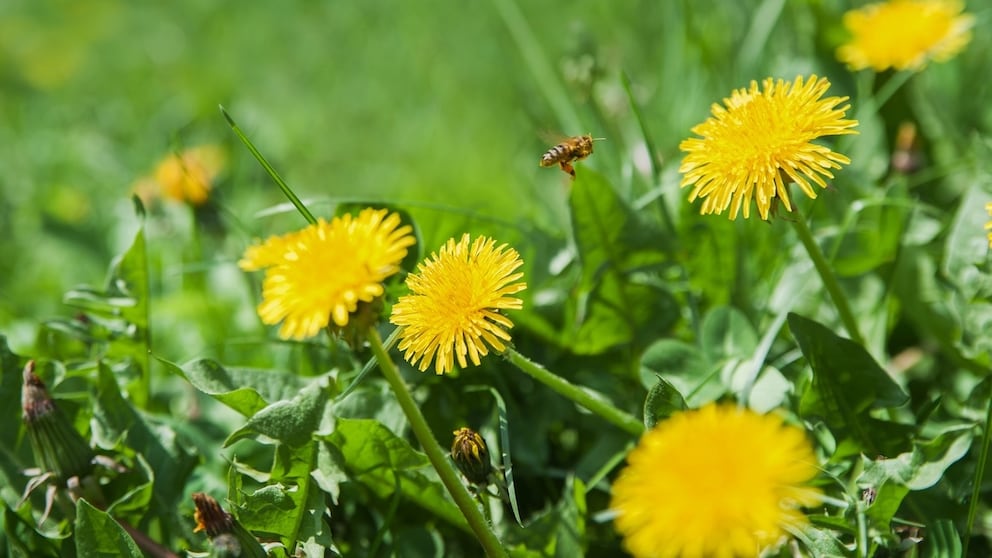
In the fight against dandelions, one should not forget that they also have their justification. Bees, for example, love the bright yellow plant. It plays an important role as a food source in spring. The dandelion (also called cow flower or blowball) is a dream for every bee. It offers abundant pollen and nectar–and that in a gigantic amount for the bees.
Dandelions bloom from April to June, providing bees with exactly what they need during this time of year: nutrients and energy. During this period, the queen is particularly active. She needs rich food for her brood so that her colony can become strong.
Also interesting: Gardening for Insects–Expert Offers Valuable Tips
But dandelions are not only a delicacy for bees; we can also use them. Since ancient times, they have been known as medicinal plants and are still used today for various ailments.
How to Get Rid of Dandelions in Your Garden and Use Them Wisely

Dandelions on the Lawn: What This Indicator Plant Reveals About Your Garden
Use Dandelions as Medicinal Plants
In naturopathy, dandelions are used for many ailments. Therefore, they deserve the designation “multitalent”–provided one is not allergic to the daisy family. They are used, among other things, for the following ailments thanks to their bitter substances:
- Loss of appetite
- Circulatory disorders
- Rheumatic diseases
- Urinary tract disorders
In general, all parts of the dandelion are used, from the flower to the root. However, it is important to pay attention to the season when harvesting. The roots have more bitter substances in spring and are therefore suitable for digestive issues or pain relief.
The roots harvested in the fall, on the other hand, are excellent for diabetics because they contain inulin. This is used as a starch substitute because it does not affect blood sugar levels. Dandelions also have a diuretic effect, which is why they have some nicknames. In some areas, they are affectionately called “bed pisser” or “piss flower.”
Related: Dandelion tea promotes digestion and is good for the liver (FITBOOK)
Use Dandelions in the Kitchen
Not only the sick benefit from dandelions. Chefs around the world are aware of its talent on the plate. For salads, both its young, fresh leaves and the flowers are used for garnishing. The leaves are considered young before the flower has opened.
Dandelion Honey
From the flowers, very delicious dandelion honey or jelly can be made–the vegan answer to bee honey. You will need:
- Measuring cup with a capacity of 1 L filled with dandelion flowers
- 1 L water
- 1 kg sugar
- 1 organic lemon
And here’s how to proceed:
- Let the flowers steep in water overnight
- Bring to a boil, let cool, and strain
- Boil again with sugar and let simmer until the consistency is honey-like
Tip: Before taking the collected dandelions home, spread them out on a bright cloth outdoors for a few minutes. This allows any beetles still in the flowers to escape.
Dandelion Pesto
Dandelions can be wonderfully served with pasta or meat, for example, as pesto.
- Toast 100 g of sunflower or pine nuts
- 100 g young dandelion leaves
- 80 ml olive oil
- 1 clove of garlic
- 50 g Parmesan
- Salt, pepper
The instructions are very simple: just put all the ingredients in the blender–and the pesto is ready!